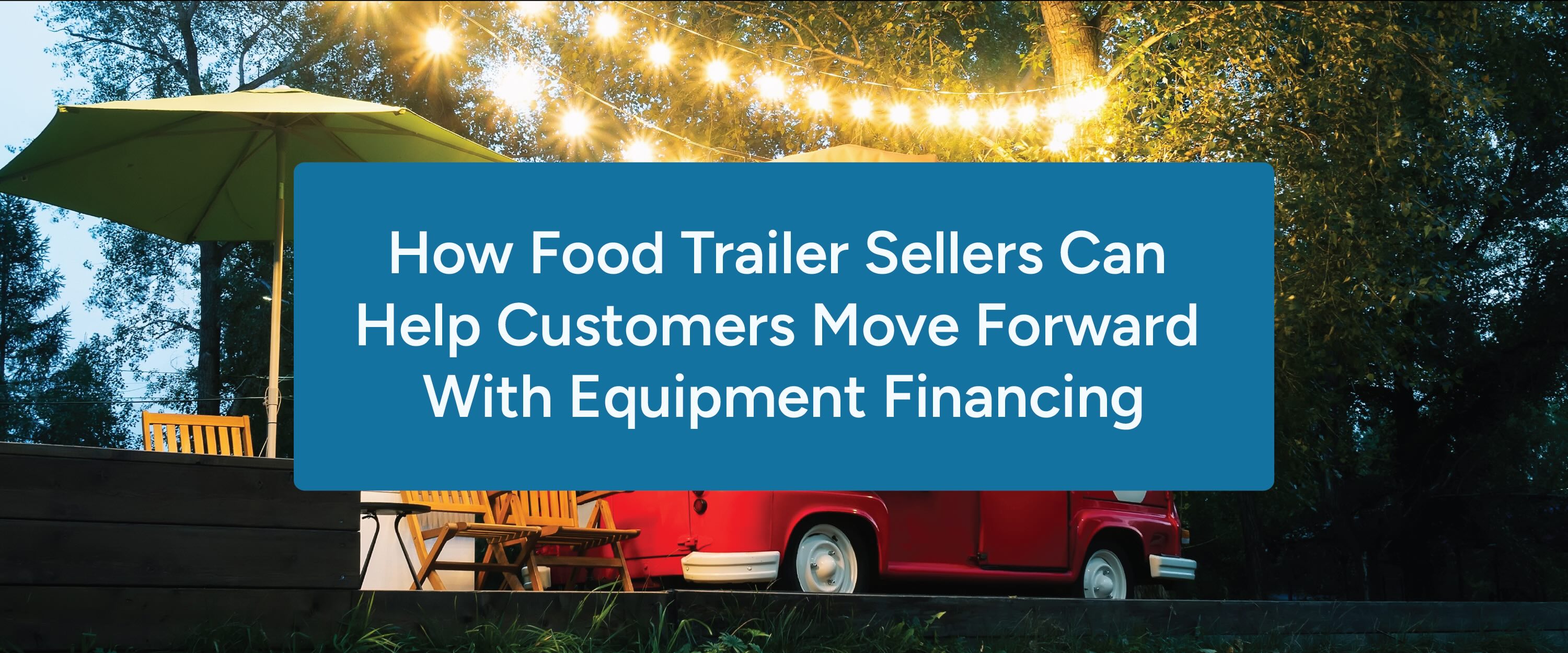
How Food Trailer Sellers Can Help Customers Move Forward With Equipment Financing
Selling a food trailer is rarely a small purchase.
For the customer, a trailer can represent a major investment in a new business, an expansion, or the next step for an operation that is already up and running. Even when a customer is excited about a trailer, the price can create hesitation.
That hesitation can show up in familiar ways. A quote goes unanswered. A customer says they need to think about it. They start looking at less expensive trailers. Or a conversation that seemed close to a sale stretches out for weeks.
For food trailer manufacturers, dealers, and sellers, offering equipment financing can give customers another way to approach the purchase without making the sales conversation entirely about the upfront cost.
Why Do Food Trailer Customers Hesitate After Getting a Quote?
The price of a food trailer is only part of what a customer is considering.
They may also be thinking about kitchen equipment, inventory, permits, insurance, branding, transportation, staffing, and the other costs that come with getting a business ready to operate.
A customer may want the trailer but still hesitate because they do not want to use a large portion of their available cash on one purchase.
That is where financing can change the conversation.
Instead of asking only whether the customer can afford the full purchase price today, the seller can help them consider how financing the equipment could fit into their broader business plan.
The goal is not to convince every customer to finance. It is to give qualified customers a clear path to consider when the upfront cost is the main obstacle.
How Can Food Trailer Sellers Reduce Quote Drop-Off?
A quote does not always get abandoned because the customer has lost interest.
Sometimes, they simply do not know what to do next.
A customer may receive a $75,000 trailer quote and immediately start comparing prices. Another may start looking for a cheaper used trailer. Someone else may put the purchase on hold because they are unsure how they will cover the upfront expense.
Sellers can address some of that hesitation by introducing financing earlier in the conversation.
Instead of waiting until a customer says, "That's more than I expected," financing can be presented as one of the options available for moving forward.
A simple conversation might include:
"If the full equipment cost upfront is a concern, we also offer equipment financing options. That can give you another way to look at the purchase based on a fixed monthly payment and the term that fits your business plans."
This keeps the conversation focused on solutions rather than immediately negotiating down the price of the trailer.
Financing Can Help Customers Focus on the Business They Are Building
A food trailer is not just a piece of equipment. It is often the foundation of the customer's business.
If a customer spends all of their available cash on the trailer, they may have less capital available for everything else they need to open and operate.
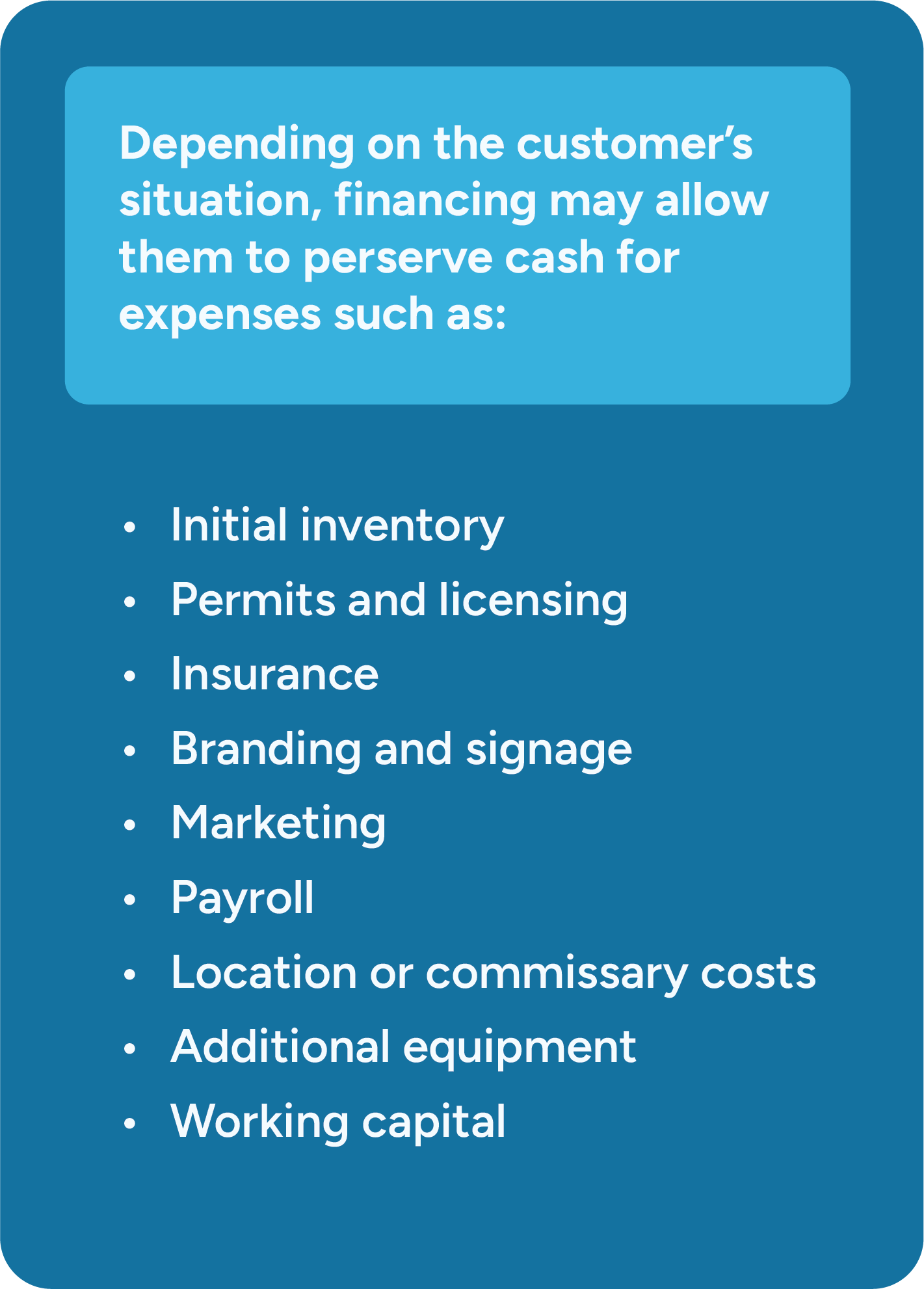
Depending on the customer's situation, financing may allow them to preserve cash for expenses such as:
- Initial inventory
- Permits and licensing
- Insurance
- Branding and signage
- Marketing
- Payroll
- Location or commissary costs
- Additional equipment
- Working capital
That does not mean financing is right for every customer. But for customers who want to keep more cash available for the rest of the business, it can be an important part of the conversation.
How Can Payment Options Help Increase Average Order Value?
Financing can also change what a customer considers possible.
A customer who is focused on the total price may decide to remove equipment from a trailer to lower the upfront cost. They may choose a smaller refrigerator, skip a piece of cooking equipment, or purchase a less expensive trailer altogether.
But when the conversation includes a financing option, the customer can evaluate the complete equipment package in the context of their business plan and monthly budget.
That may make it easier for a seller to have a conversation about the equipment the customer actually needs rather than simply working backward from the lowest possible purchase price.
For sellers, that can create an opportunity to offer a more complete solution while helping customers understand how the equipment fits into their plans.
Financing does not automatically increase order size, and sellers should never encourage a customer to take on equipment they cannot reasonably support. The goal is to give customers more ways to evaluate the purchase.
The Seller's Role Is to Make the Next Step Clear
Customers do not necessarily need more information. They often need a clearer path forward.
A food trailer seller can help by explaining:
- What is included in the quote?
Make sure the customer understands exactly what they are purchasing. - What additional equipment might they need?
Discuss the equipment required to get the trailer ready for its intended use. - What financing options are available?
Let customers know early that financing may be available for qualified businesses. - What will the application process look like?
Explain the basic next step without promising an approval or specific terms. - What happens after approval?
Help the customer understand how financing fits into the purchasing process.
The easier the process is to understand, the easier it can be for a customer to make an informed decision.
Food Trailer Financing Should Fit the Seller's Workflow
Not every financing solution is designed around business equipment sales.
Some capital providers offer broader lending products. Other payment tools are primarily designed for ecommerce transactions and consumer purchases.
For food trailer sellers, the financing process needs to work alongside the equipment sale.
Clicklease focuses specifically on business-purpose equipment leasing. That means financing can be incorporated into the seller's existing sales process rather than treating the equipment purchase like a standard consumer checkout.
Clicklease offers a fast qualification process, fixed lease terms, and fixed monthly payments. Qualified customers can review financing options and choose a term that fits their business plans.
For sellers, the benefit is having another path to offer when upfront cost becomes a barrier to the sale.
What Should Sellers Explain Before Customers Apply?
The financing conversation should be straightforward.
Before a customer applies, sellers should make sure they understand that:
- Financing is subject to approval.
- The customer should review the terms and payment obligations before accepting an offer.
- The monthly payment and lease term should fit the customer's business plans.
- Financing the trailer does not eliminate the customer's other costs of starting or operating a food business.
- The customer should understand what happens at the end of the lease.
- With Clicklease, a purchase option may be available at the end of the lease, depending on the agreement. Customers are not obligated to purchase the equipment.
Sellers do not need to become financing experts. Their role is to introduce the option, explain the basic process, and connect the customer with the financing provider for specific terms and questions.
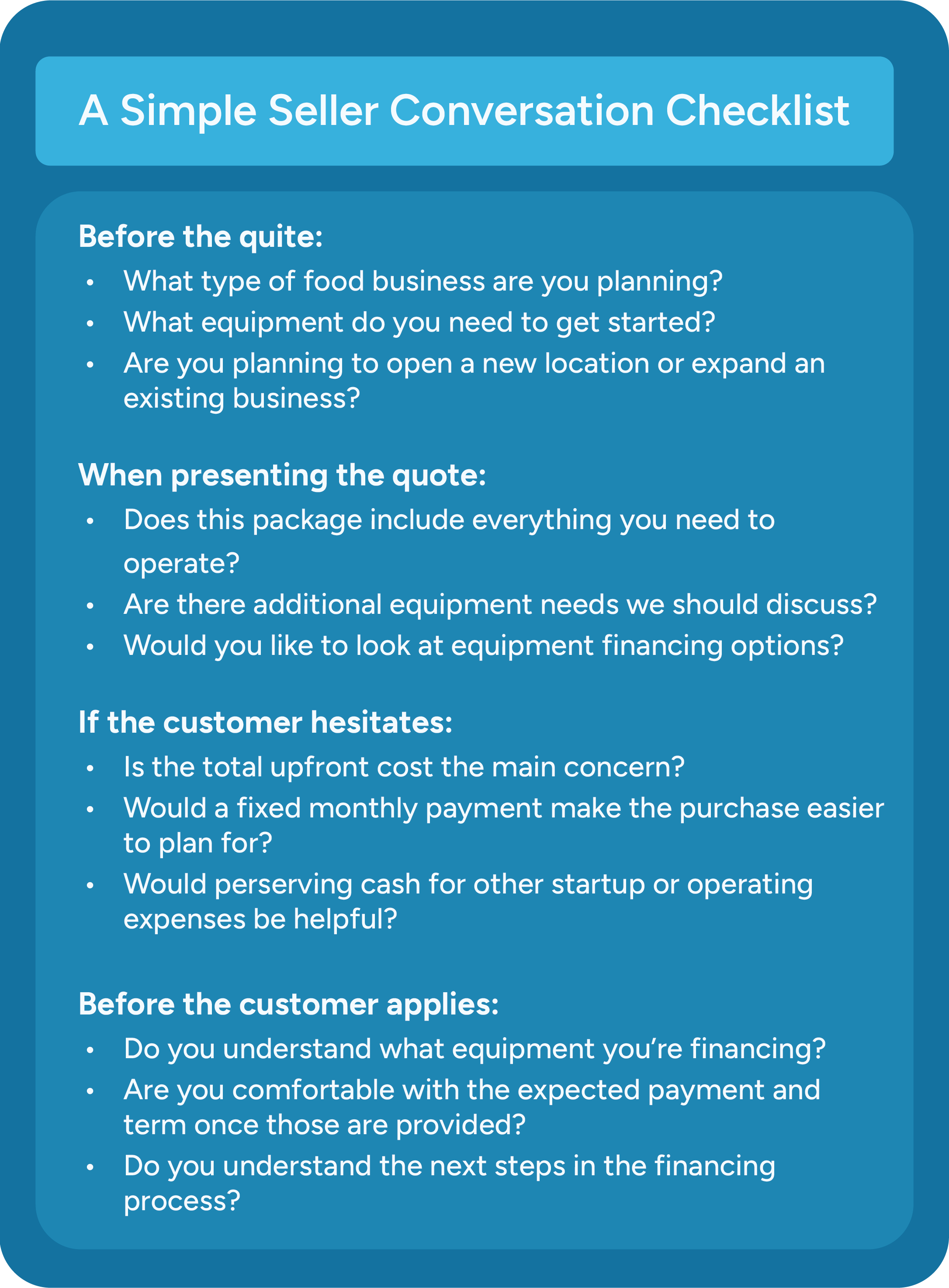
A Simple Seller Conversation Checklist
When a customer receives a food trailer quote, sellers can use a few questions to keep the conversation moving.
Before the quote:
- What type of food business are you planning?
- What equipment do you need to get started?
- Are you planning to open a new location or expand an existing business?
When presenting the quote:
- Does this package include everything you need to operate?
- Are there additional equipment needs we should discuss?
- Would you like to look at equipment financing options?
If the customer hesitates:
- Is the total upfront cost the main concern?
- Would a fixed monthly payment make the purchase easier to plan for?
- Would preserving cash for other startup or operating expenses be helpful?
Before the customer applies:
- Do you understand what equipment you're financing?
- Are you comfortable with the expected payment and term once those are provided?
- Do you understand the next steps in the financing process?
These questions can help uncover what is actually holding up the sale instead of immediately assuming the customer wants a lower price.

Give Customers a Path Forward
A customer who hesitates over the price of a food trailer is not necessarily a lost customer.
They may simply need a different way to look at the purchase.
For food trailer sellers, offering equipment financing can create another path between the initial quote and the final sale. It can help qualified customers consider the equipment they need, preserve cash for other business expenses, and evaluate fixed monthly payments alongside their broader business plans.
The right financing solution will not close every sale. But giving customers a clear financing option can help keep qualified buyers moving forward instead of sending them somewhere else to find a lower-cost alternative.
For sellers, that can make financing more than a payment option. It can become another tool for turning serious interest into a path toward getting the equipment into service.