Comparing Food Truck Lease vs. Loan Equipment Financing
When you are financing equipment for a food truck, the decision is bigger than the payment you make in the first month.
A food truck can change significantly over the first few years. A new operator may spend the first year building a customer base. By year two, the business may be taking on larger events, adding menu items, replacing equipment, or preparing for another truck.
The way you finance equipment can affect how much cash is available along the way.
A traditional equipment loan and an equipment lease can both help a food truck business acquire the equipment it needs. But the payment structure, ownership, cash requirements, and end-of-term options can be different.
To understand which may fit your business, it helps to look beyond the initial approval and consider what the financing could look like year after year.
Loan vs. Lease: The Basics
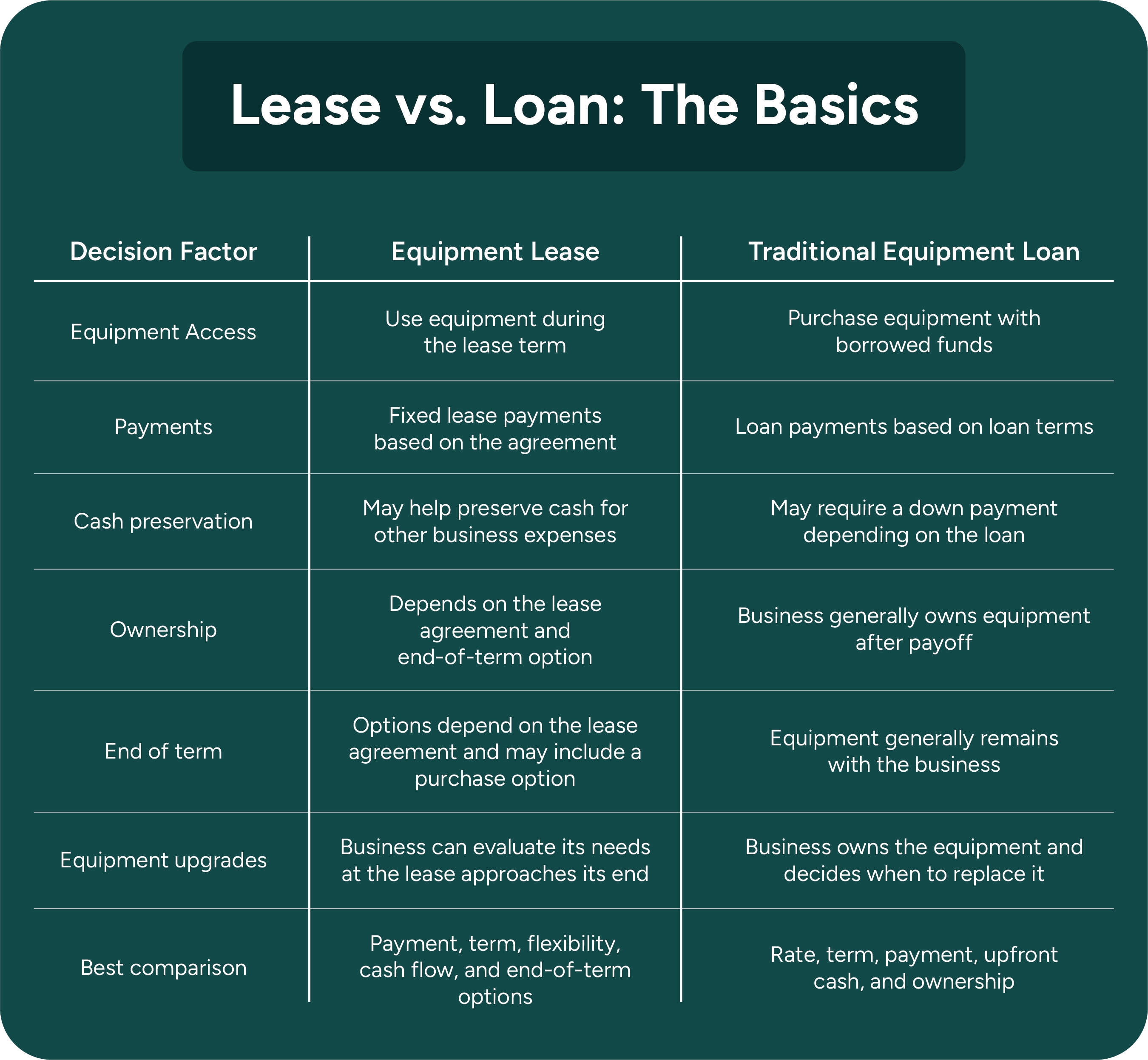
A traditional equipment loan typically involves borrowing money to purchase equipment and making payments over a set period. Once the loan is paid off, the business generally owns the equipment.
An equipment lease provides the business with the use of the equipment in exchange for scheduled payments over an agreed term. Depending on the lease agreement, the business may have an option to purchase the equipment at the end of the lease.
Both approaches can provide access to equipment without paying the entire cost upfront. The important differences come down to how each option fits the business's cash flow, equipment plans, and long-term goals.
Two Food Truck Owners, Two Financing Decisions
Consider two hypothetical food truck owners.
Both are starting businesses with similar equipment needs. Each needs approximately $60,000 in equipment to get the truck ready to operate.
One owner chooses a traditional equipment loan.
The other chooses an equipment lease.
These examples are illustrative only. Actual rates, payments, terms, approval requirements, and lease options vary by transaction and customer.
Meet Alex: The Food Truck Owner Who Uses a Loan
Alex is starting a taco truck and needs cooking equipment, refrigeration, a generator, ventilation equipment, and other kitchen equipment.
Alex chooses a traditional equipment loan because long-term ownership is the priority.
The loan has a fixed payment and a five-year term.
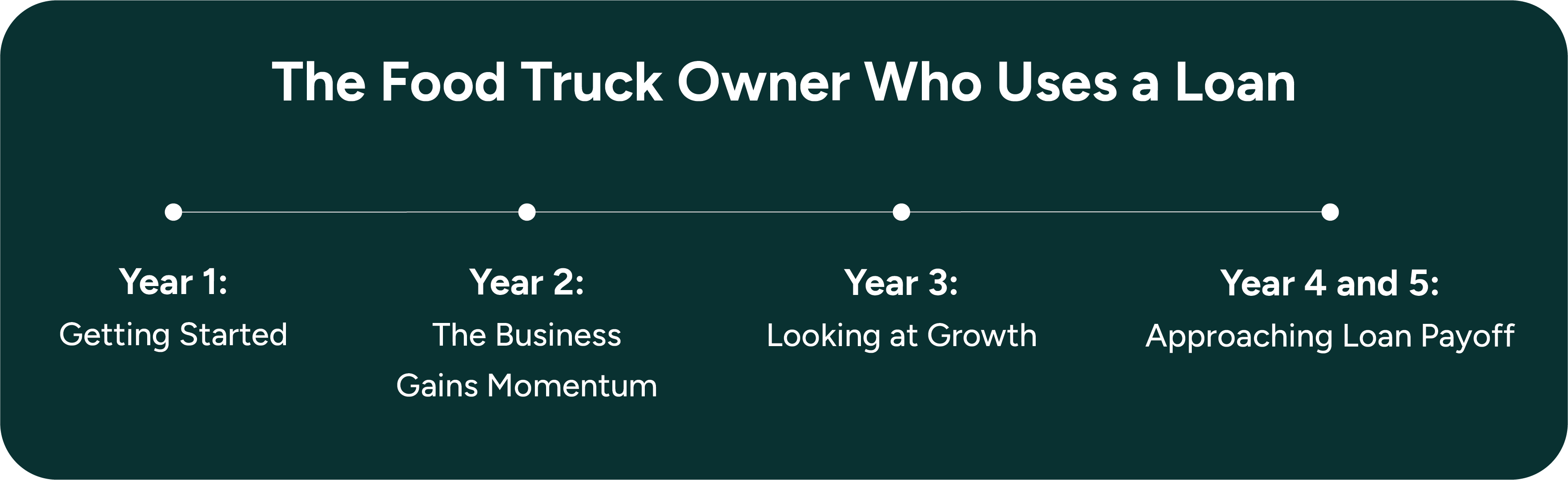
Year 1: Getting Started
Alex puts the equipment into service and begins building the business.
The monthly loan payment becomes one of the fixed expenses in the business budget, alongside food costs, insurance, fuel, permits, maintenance, and other operating expenses.
The equipment is helping Alex generate revenue, but the business is still establishing itself.
The important consideration during year one is cash flow.
A food truck can have strong sales one month and slower sales the next, so Alex needs to make sure the equipment payment fits alongside the rest of the operating budget.
Year 2: The Business Gains Momentum
By year two, Alex has a better understanding of the business.
The truck has a regular customer base. Event bookings are increasing. Alex also realizes that one piece of the original equipment setup is limiting capacity.
Because the original equipment was financed with a loan, Alex still has payments remaining.
The equipment is also still owned by the business once the loan is eventually paid off.
That can be an advantage for an owner whose priority is long-term ownership.
But adding another major equipment purchase means Alex now needs to consider how a second financing obligation would affect cash flow.
Year 3: Looking at Growth
By year three, Alex is considering whether to add another cooking station and upgrade refrigeration.
The original loan is still part of the financial picture.
Alex now has a few options. The business can continue using the existing equipment, pay down the existing loan faster if cash flow allows, or seek additional financing for the new equipment.
The original equipment is becoming an established part of the business, and ownership remains the long-term goal.
Years 4 and 5: Approaching Loan Payoff
As Alex gets closer to the end of the original loan, more of the equipment's useful life remains after the debt is paid off.
Once the loan is fully satisfied, the business generally owns the equipment without that loan payment.
That can free up monthly cash flow for other business priorities.
However, Alex is also responsible for deciding when the equipment should be replaced or upgraded. Ownership provides control, but it also means the business carries the equipment for as long as it makes sense.
Meet Jamie: The Food Truck Owner Who Uses an Equipment Lease
Jamie is starting a similar taco truck with a similar equipment package.
Jamie wants to preserve more cash for inventory, marketing, repairs, and working capital while getting the necessary equipment into service.
Jamie chooses an equipment lease with fixed monthly payments and a set lease term.
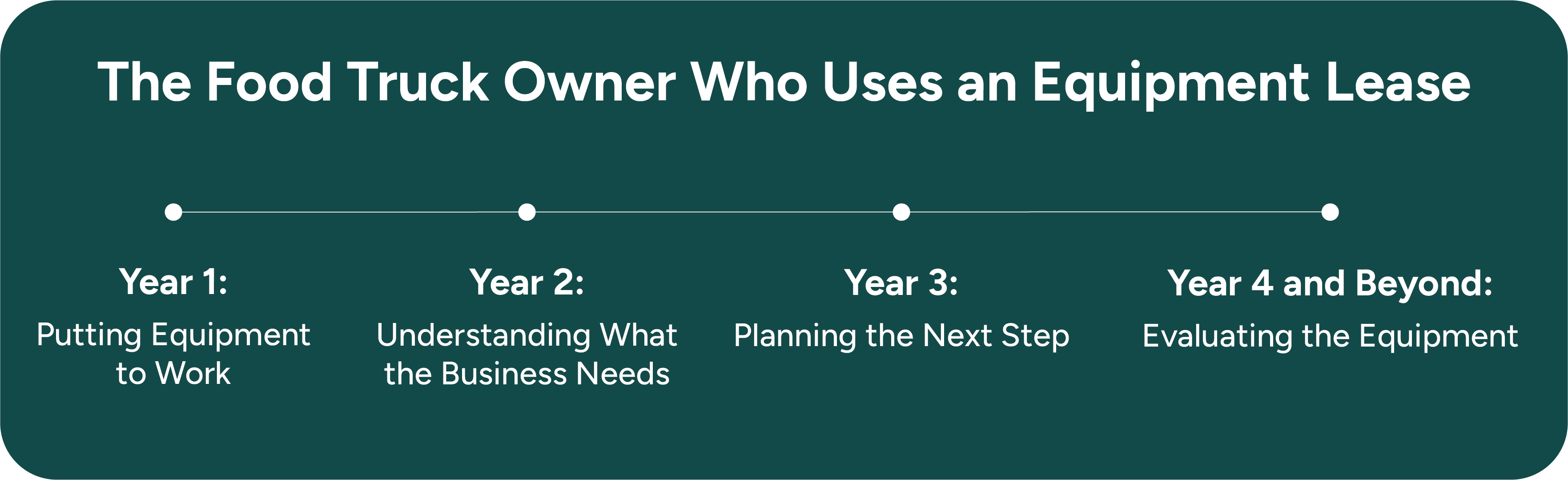
Year 1: Putting Equipment to Work
Jamie gets the equipment into the business and begins operating.
Instead of using a large amount of available cash to pay for the equipment upfront, Jamie makes the scheduled lease payments while using the equipment to operate the truck.
That leaves more cash available for the other costs that come with running a food business.
The payment becomes a predictable monthly expense that Jamie can include in the operating budget.
Just like Alex, Jamie still needs enough revenue to support the payment. Leasing does not eliminate the financial responsibility of owning a business.
Year 2: Understanding What the Business Needs
By the second year, Jamie has a much clearer picture of the business.
The truck is performing well, but Jamie is also learning what equipment is actually being used most.
Maybe refrigeration capacity needs to increase. Maybe a piece of cooking equipment is getting heavy use. Maybe the business is considering adding another truck.
Because Jamie is approaching the later part of the lease term, the upcoming end-of-term options become part of the planning conversation.
Depending on the agreement, Jamie may have the option to purchase the equipment.
That gives Jamie an opportunity to evaluate whether the equipment still makes sense for the business before deciding what comes next.
Year 3: Planning the Next Step
Jamie now has several years of operating experience and can make equipment decisions based on actual business needs rather than estimates made before opening.
If the original equipment is still working well, Jamie can evaluate the available end-of-term options.
If the business has changed significantly, Jamie can consider what equipment will make sense for the next stage.
The lease has provided a defined term during which Jamie has used the equipment while making fixed monthly payments.
Years 4 and Beyond: Evaluating the Equipment
At the end of the lease, Jamie can review the options available under the agreement.
Depending on the terms, a purchase option may be available.
If purchasing the equipment makes sense, Jamie can choose that option.
If the business would rather move in another direction, Jamie can evaluate the other options available under the agreement.
The important difference is that Jamie does not have to make the same equipment decision at the beginning of the business that will be made several years later.
What Does a Food Truck Business Loan Look Like After Two Years?
After two years, a food truck loan is still primarily about the remaining balance, payment schedule, and ownership of the equipment.
If a business took out a five-year loan, it would generally still have three years of scheduled payments remaining after the second year.
The equipment continues to be used by the business, and once the loan is paid off, the business generally owns it outright.
For an owner who expects to keep the equipment for many years and prioritizes ownership, this can be an important benefit.
But the owner should also consider whether the equipment will still meet the business's needs by the time the loan is paid off.
A food truck that grows quickly may need to replace or upgrade equipment before the original loan is finished.
What Does Food Truck Financing Look Like After Two Years?
After two years of equipment financing, the answer depends on the type of financing used and the specific agreement.
With an equipment lease, the business has been using the equipment while making scheduled lease payments during the lease term.
As the business approaches the end of the lease, the owner can evaluate the options available under the agreement.
With Clicklease, qualified businesses can access business-purpose equipment leasing with fixed lease terms and fixed monthly payments. Depending on the agreement, a purchase option may be available at the end of the lease.
The business is not obligated to purchase the equipment.
That can give an owner more flexibility to evaluate whether the equipment still fits the business before making a long-term decision.
When Can Leasing Food Truck Equipment Make Sense?
Leasing may make sense when a food truck owner wants to:
- Preserve cash for inventory and operating expenses
- Get equipment into service without paying the entire cost upfront
- Work with predictable fixed monthly payments
- Add equipment while keeping cash available for growth
- Match the equipment commitment to a defined lease term
- Have options at the end of the lease rather than committing to ownership from the beginning
That does not mean leasing is automatically better than a loan.
A business that strongly prioritizes ownership and expects to keep equipment for many years may prefer a traditional loan.
The decision should be based on the equipment, the business's cash position, expected revenue, and long-term plans.
What Should Food Truck Owners Compare?
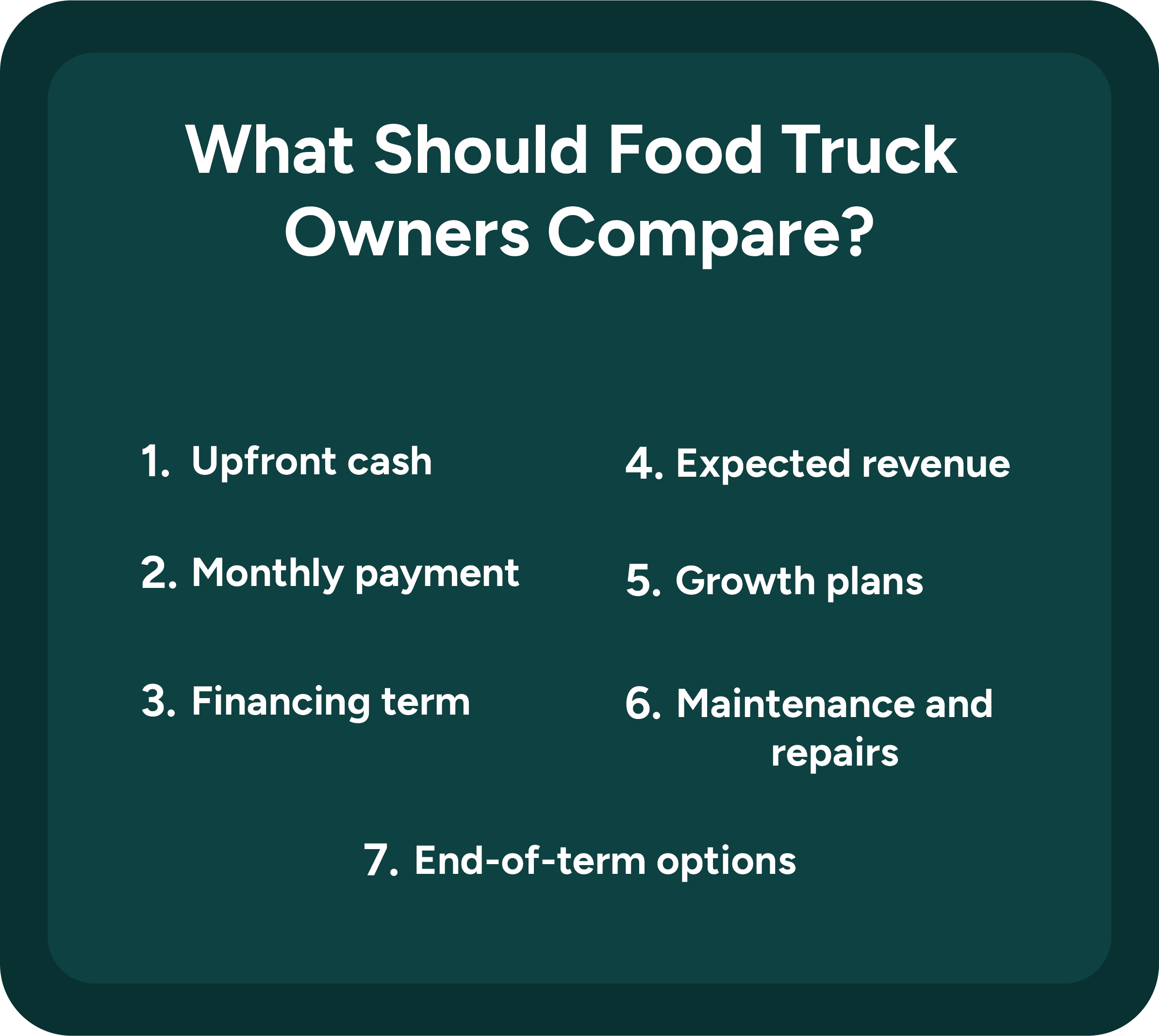
Before choosing financing, look at the entire picture instead of focusing on one number.
1. Upfront cash
How much cash will the business need at the beginning?
Consider not just the equipment, but also inventory, permits, insurance, payroll, marketing, fuel, and working capital.
2. Monthly payment
What will the equipment cost the business each month?
A predictable payment can make it easier to build the equipment expense into a monthly budget.
3. Financing term
How long will the business be making payments?
Compare the financing term with the expected useful life of the equipment.
4. Expected revenue
How directly does the equipment contribute to revenue?
Equipment that allows the business to serve more customers or operate more efficiently may have a different financial impact than equipment that provides a minor convenience.
5. Growth plans
Will the food truck look the same two or three years from now?
If the business expects to expand quickly, flexibility may be more important than simply choosing the financing option that results in ownership.
6. Maintenance and repairs
Regardless of financing method, the business should understand who is responsible for maintaining the equipment and how repairs will be handled.
7. End-of-term options
If considering a lease, understand exactly what happens when the term ends.
Ask whether there is a purchase option and what other options are available under the agreement.
The Right Choice Can Change as the Business Changes
The best financing option is not necessarily the one that looks best on day one.
A new food truck may prioritize preserving cash and getting equipment into service. A growing operation may prioritize flexibility. An established business may place more value on ownership.
That is why comparing a lease and a loan should involve more than comparing two monthly payments.
Think about where the business is today, where it expects to be in two years, and what it may need from its equipment after that.
For some food truck owners, a traditional equipment loan may be the right fit. For others, an equipment lease may provide the combination of predictable payments, cash preservation, and flexibility they are looking for.
The goal is to choose financing that supports the business, not just the equipment purchase.
See What Equipment Leasing Could Look Like for Your Food Truck
If preserving cash, getting equipment into service, and planning around fixed monthly payments are priorities for your food truck, equipment leasing may be worth considering.
Clicklease provides business-purpose equipment leasing with fixed lease terms and fixed monthly payments for qualified businesses. Depending on the agreement, a purchase option may also be available at the end of the lease.
Before choosing any financing option, review the terms carefully and make sure the payment fits your business's expected cash flow.
Your food truck will change as it grows. Your equipment financing should make sense for where the business is going, too.