Equipment Lease Terms: How Clicklease Protects You with Transparency
The Importance of Transparency in Equipment Leasing
When small business owners explore equipment leasing, one of the biggest questions is how lease terms actually work. Understanding the structure of your lease, the length of the agreement, and what happens at the end are key to making confident financial decisions.
At Clicklease, transparency is at the center of every lease agreement. This guide breaks down common equipment lease terms, how leases are structured, and why Clicklease is different.
What Are Equipment Lease Terms?
Equipment lease terms refer to the specific details that outline how a business can use and pay for leased equipment over time. These terms define the duration of the lease, the payment amount, responsibilities of both parties, and end-of-lease options.
A clear understanding of these terms helps small business owners manage cash flow, plan for growth, and avoid surprises.

What Is the Typical Term of an Equipment Lease?
Most equipment leases range from 12 to 60 months, depending on the type of equipment, its cost, and the needs of the business.
Shorter lease terms work well for items that may need frequent upgrades– such as technology or restaurant appliances– while longer leases are common for high-value assets like construction machinery or medical devices.
Clicklease offers simple options across this range, giving business owners the ability to match their lease term with their business goals.
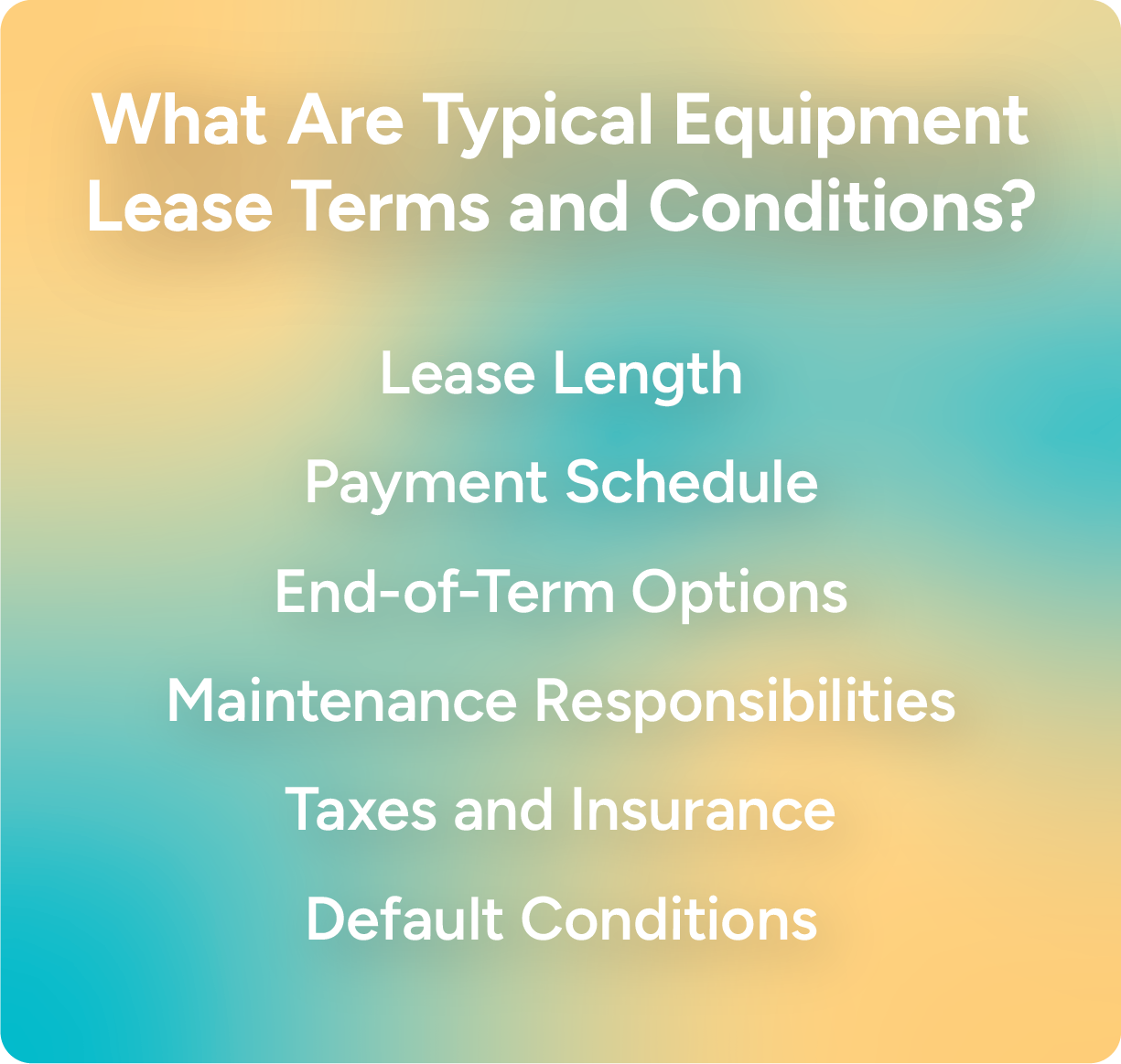
What Are Typical Equipment Lease Terms and Conditions?
Every lease includes terms and conditions that define responsibilities, payments, and options. Common sections include:
- Lease length: The total duration of the agreement.
- Payment schedule: The timing and frequency of payments.
- End-of-term options: Choices for purchasing, renewing, or returning the equipment.
- Maintenance responsibilities: Which party manages upkeep during the lease.
- Taxes and insurance: How these costs are handled throughout the term.
- Default conditions: What happens if payments are missed.
Clicklease provides clear explanations of each condition, so there are no hidden details or unclear clauses.
How Is an Equipment Lease Structured?
An equipment lease is structured around three main parts:
- The Agreement: This outlines all essential details such as payment amount, term length, and responsibilities.
- The Payment Schedule: Payments are typically made monthly, allowing small businesses to manage their budget with consistency.
- The End-of-Lease Option: Businesses can choose to purchase, renew, or return the equipment when the term ends.
This structure allows small business owners to use essential equipment without the large upfront cost of purchasing it outright.
What Are the Typical Lease Option Terms?
End-of-lease options are one of the most important parts of any equipment lease. These include:
- Purchase Option: The shopper can buy the equipment for a pre-set amount, often based on fair market value or a fixed price.
- Renewal Option: The business can extend the lease for additional time.
- Return Option: The equipment can be returned at the end of the term with no further obligation, assuming all conditions are met.
Clicklease helps business owners choose the best option based on how they plan to use their equipment long term.
Equipment Finance Terms and Conditions Explained
Understanding equipment finance terms and conditions can make a significant difference when choosing between leasing and other forms of equipment financing.
Key terms to know include:
- Lease Term: The number of months you agree to make payments.
- Residual Value: The estimated value of the equipment at the end of the lease.
- Monthly Payment: The fixed amount paid each month.
- Early Buyout Option: A clause that may allow purchasing before the term ends.
- Fair Market Value: The current price of the equipment if sold at the end of the lease.
Clicklease clearly defines every term so small business customers fully understand what they are agreeing to before signing.
Example: Simple Lease Terms for Restaurant Equipment
Restaurant owners often need to upgrade or replace equipment quickly. Ovens, refrigerators, or point-of-sale systems must stay current.
Clicklease provides simple lease terms for restaurant equipment, which can include:
- Lease lengths of 24 to 48 months
- Clear payment schedules
- Options to purchase, renew, or upgrade at the end of the term
This makes it possible for restaurant owners to stay current without major upfront expenses while keeping operations smooth and efficient.
The Benefits of Leasing with Clicklease
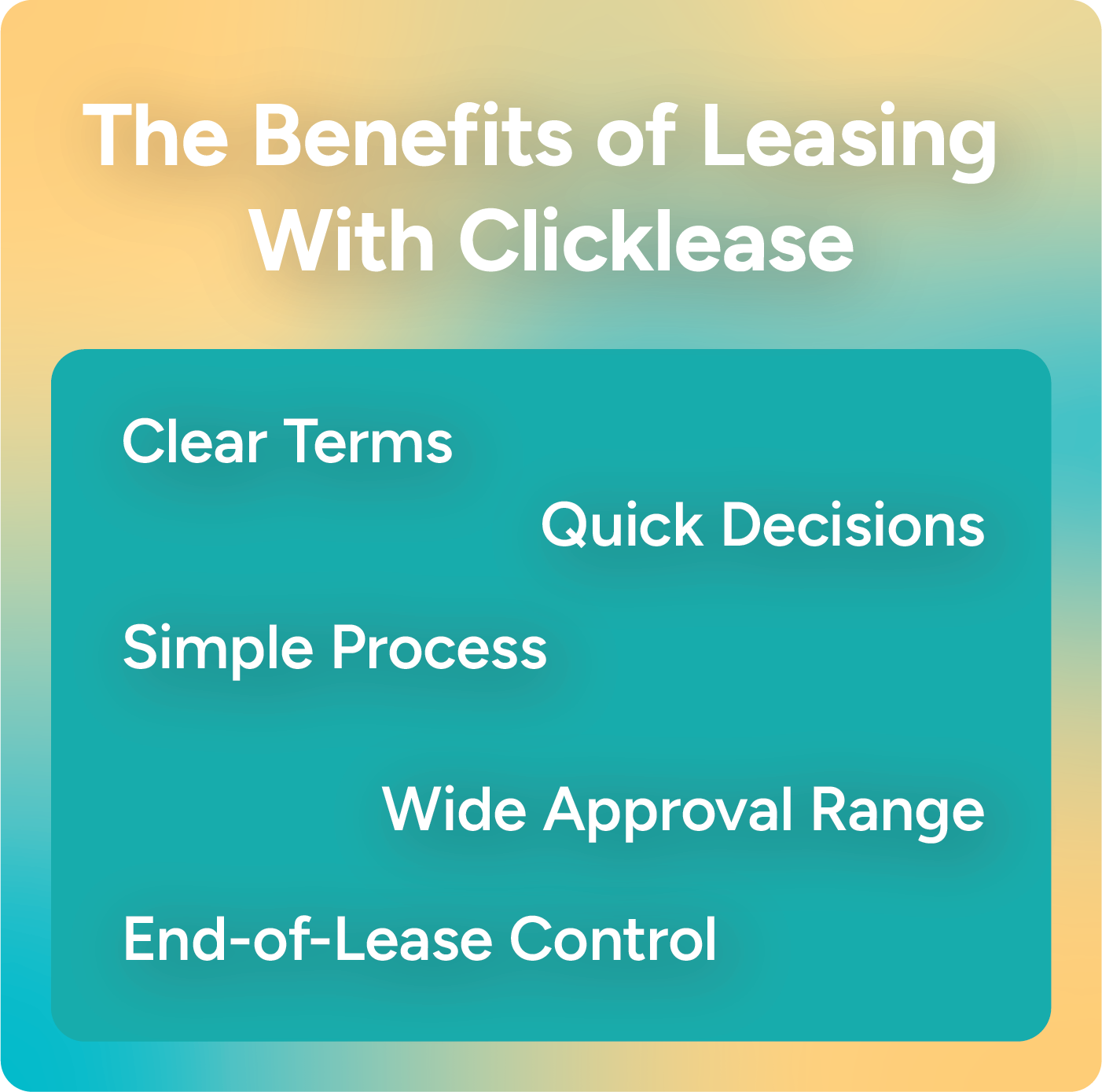
Clicklease is built to serve small business owners with transparent, easy-to-understand leasing options. Here’s what sets Clicklease apart:
- Clear Terms: Every detail is explained in plain language, with no hidden conditions.
- Quick Decisions: Businesses can apply online and receive a decision in minutes.
- Simple Process: From application to funding, the process is fast and designed to help you focus on your business.
- Wide Approval Range: Clicklease supports a broad spectrum of credit profiles, helping more small businesses access the tools they need.
- End-of-Lease Control: Choose to purchase, renew, or return your equipment based on what works best for your business.
Transparency and trust are at the center of every Clicklease agreement.
Why Transparency Matters
When you understand your equipment leasing terms, you make smarter financial decisions. Clicklease believes small businesses deserve clear information and honest support.
By giving business owners a clear picture of their lease, Clicklease helps build confidence and long-term partnerships that drive growth.
Final Thoughts
Equipment leasing can empower your small business with the tools needed to grow, expand, and compete. Understanding your equipment lease terms and conditions ensures you make the best choice for your goals.
Clicklease is proud to lead the industry in transparency and service. Whether you run a restaurant, repair shop, or manufacturing business, our leasing options make it easy to move forward with confidence.