Starter Kit Under $25K: Financing Equipment for Your Practice
Opening a new practice comes with a long list of expenses. Between securing a location, hiring employees, purchasing supplies, and marketing your services, it's easy for startup costs to stretch your budget before you've seen your first patient.
The good news is that you don't need to buy everything at once.
Many successful practices start with the equipment they need to open their doors, serve patients well, and begin generating revenue. Additional equipment can often be added as the business grows.
If you're planning your budget, here's how to think about building a practical equipment starter kit for under $25,000 while preserving cash for the rest of your business.
Note: Every practice is different. Equipment needs and pricing vary based on your specialty, licensing requirements, location, and the services you offer. The examples below are intended as planning guidelines rather than exact budgets.
What Equipment Does a New Practice Need First?
Before buying equipment, ask one simple question:
What do I absolutely need to begin serving patients?
Focus on equipment that directly supports patient care and daily operations. Everything else can often wait until your practice is established.
Start by prioritizing:
- Equipment required to perform your core services
- Technology needed to schedule patients and manage records
- Furniture for patients and staff
- Basic office equipment
- Equipment that directly contributes to revenue
Separating "must have" from "nice to have" helps you spend your startup budget where it matters most.
Sample Starter Kits by Practice Type
Here are examples of how different practices might approach an equipment budget under $25,000.
Medical Office
A primary care or specialty clinic may prioritize:
Equipment
Typical Cost Range
Exam table
$1,000 to $4,000
Basic diagnostic equipment
$2,000 to $6,000
Reception furniture
$1,500 to $4,000
Computers and office technology
$2,000 to $5,000
Medical storage and carts
$1,000 to $3,000
Dental Adjacent Practice
For practices that provide preventive or specialty dental services, priorities may include:
Equipment
Typical Cost Range
Patient chair
$3,000 to $8,000
Sterilization equipment
$2,000 to $5,000
Lighting and instruments
$2,000 to $5,000
Office technology
$2,000 to $4,000
Wellness Practice
Examples include chiropractic, nutrition, or wellness clinics.
Typical startup equipment may include:
Equipment
Typical Cost Range
Treatment tables
$1,000 to $4,000
Office furniture
$1,500 to $3,000
Computers and scheduling technology
$2,000 to $4,000
Therapy accessories and supplies
$1,000 to $3,000
Med Spa
Medical spas often invest in equipment that directly generates revenue.
A basic starter kit may include:
Equipment
Typical Cost Range
Entry level treatment device
$8,000 to $15,000
Treatment bed
$1,000 to $3,000
Reception furniture
$2,000 to $4,000
Computers and payment systems
$2,000 to $4,000
Therapy Practice
Physical therapy and rehabilitation clinics often begin with:
Equipment
Typical Cost Range
Treatment tables
$1,500 to $4,000
Exercise and rehabilitation equipment
$3,000 to $8,000
Office furniture
$1,500 to $3,000
Computers and practice software
$2,000 to $4,000
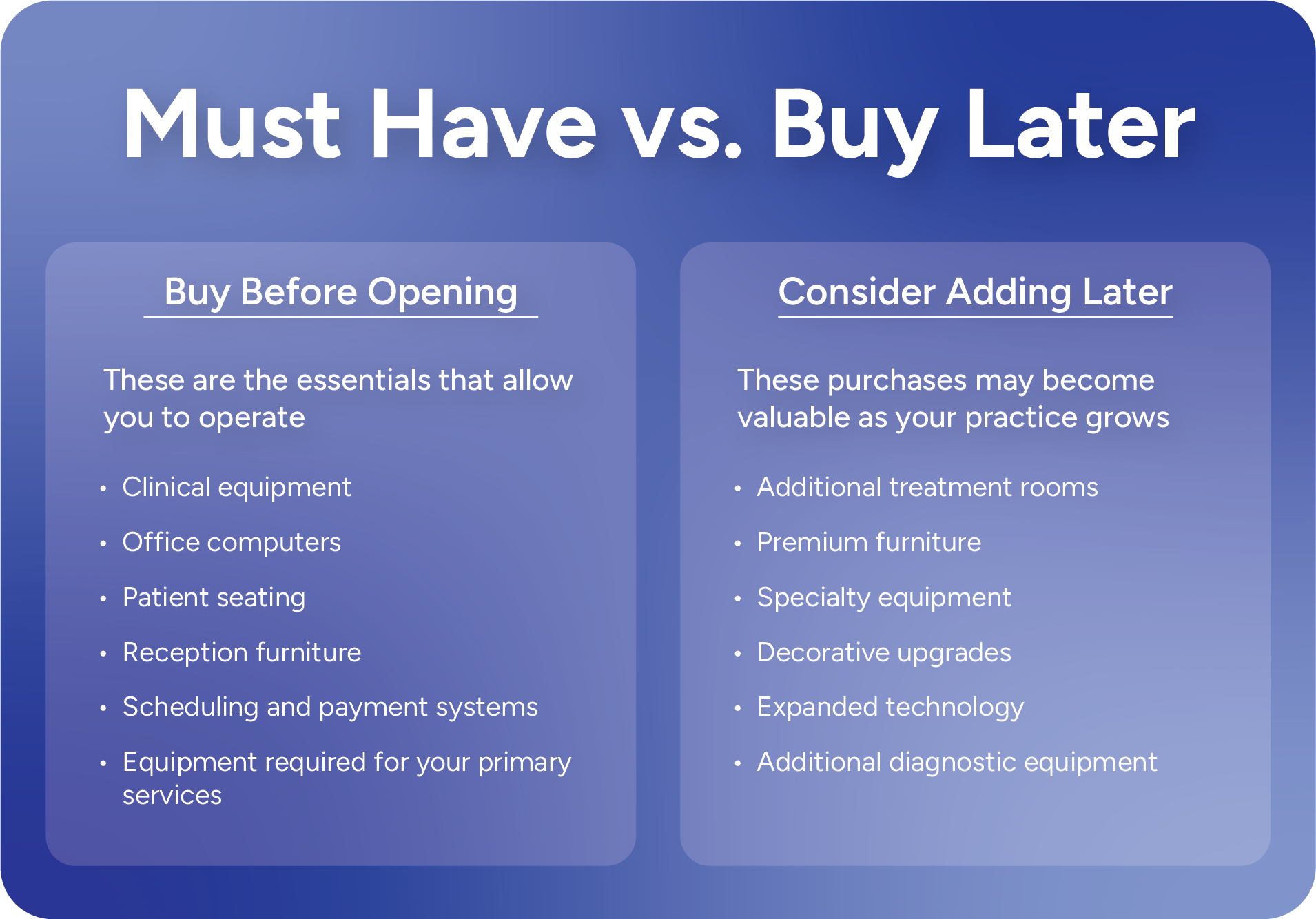
Must Have vs. Buy Later
One of the easiest ways to control startup costs is to divide purchases into two categories.
Buy Before Opening
These are the essentials that allow you to operate.
- Clinical equipment
- Office computers
- Patient seating
- Reception furniture
- Scheduling and payment systems
- Equipment required for your primary services
Consider Adding Later
These purchases may become valuable as your practice grows.
- Additional treatment rooms
- Premium furniture
- Specialty equipment
- Decorative upgrades
- Expanded technology
- Additional diagnostic equipment
Waiting until your practice has steady revenue can make these investments easier.
How to Keep Startup Equipment Costs Manageable
Every dollar matters when you're launching a business.
Here are a few ways practice owners manage equipment costs without sacrificing quality.
Prioritize Revenue Producing Equipment
If a piece of equipment helps you begin seeing patients or offering additional services, it's usually worth prioritizing.
Revenue generating equipment often provides a faster return than purchases focused solely on aesthetics.
Avoid Buying for Future Growth
It's natural to think about where your business will be in five years.
But your startup budget should focus on where your business is today.
Purchase the equipment you need to open successfully, then expand as patient demand increases.
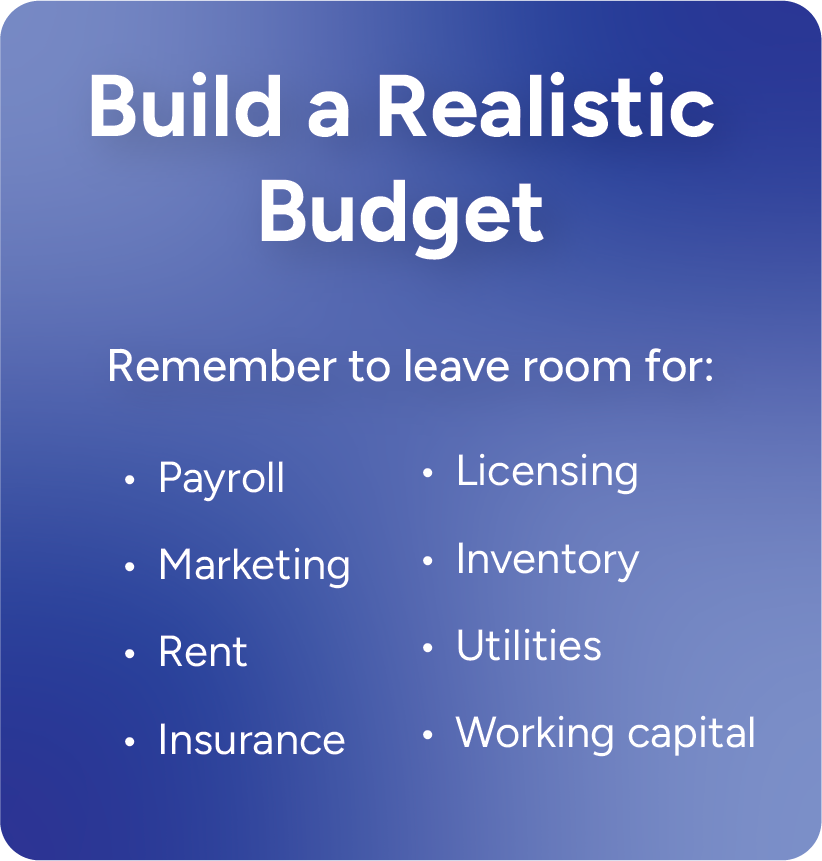
Build a Realistic Budget
Equipment is only one part of your startup costs.
Remember to leave room for:
- Payroll
- Marketing
- Rent
- Insurance
- Licensing
- Inventory
- Utilities
- Working capital
Maintaining financial flexibility can make your first year much less stressful.
Questions to Ask Before Purchasing Equipment
Before making major equipment decisions, consider these questions:
- Will this equipment help me begin serving patients immediately?
- Does it improve efficiency or patient experience?
- Is it required for my primary services?
- Can this purchase reasonably wait until later?
- How will this fit into my overall startup budget?
These questions help keep purchases aligned with your business goals instead of impulse upgrades.
How Equipment Financing Can Help Preserve Cash
One of the biggest challenges for new practices is balancing equipment purchases with every other startup expense.
Equipment financing allows businesses to acquire the equipment they need while preserving cash for other priorities.
That can make it easier to cover expenses such as:
- Employee hiring
- Marketing campaigns
- Leasehold improvements
- Inventory
- Operating expenses
- Emergency reserves
Rather than committing a large portion of your startup capital to equipment upfront, equipment financing allows you to spread costs over time while keeping more working capital available.
Why Fixed Monthly Payments Can Help
Predictable monthly payments make startup planning easier.
Knowing what your equipment payments will be each month can help you build a more accurate operating budget and reduce uncertainty during your first year.
Many practice owners appreciate having a consistent monthly expense that fits alongside payroll, rent, utilities, and other recurring costs.
How Clicklease Helps New Practices
Clicklease helps businesses lease commercial equipment through a simple application process designed for equipment leasing.
Whether you're opening your first location or expanding an existing practice, business equipment leasing can help you acquire the equipment you need while preserving cash for the many other expenses that come with launching and growing a practice.
Instead of delaying important purchases while saving for large upfront costs, fixed monthly payments can help you put equipment to work sooner so you can focus on serving patients and building your business.
Final Thoughts
Building a practice doesn't require purchasing every piece of equipment on day one. The most successful practice owners focus on buying what they need to open, provide excellent care, and create a positive patient experience.
As your patient base grows, you can continue investing in additional equipment that supports new services and future expansion. By prioritizing essential purchases and considering equipment financing, you can launch with greater confidence while keeping more cash available for the many other investments that help a new practice succeed.