Landscaping Business Equipment Upgrades: How to Get New Equipment
Your equipment can have a direct impact on how your landscaping business operates. When a mower spends more time in the shop than on a job site, crews are waiting on equipment, or your current setup cannot handle the work your customers are asking for, it may be time to consider an upgrade.
For landscaping businesses, upgrading equipment is not always about getting the newest machine. It is about having the right equipment for the work you are doing and the work you want to take on.
A new mower, dump trailer, or piece of compact equipment can help a business increase capacity, reduce downtime, and take on jobs that may not have been practical with its existing equipment.
But before making an upgrade, landscaping owners should consider the condition of their current equipment, their upcoming workload, and how getting the equipment fits into their budget.
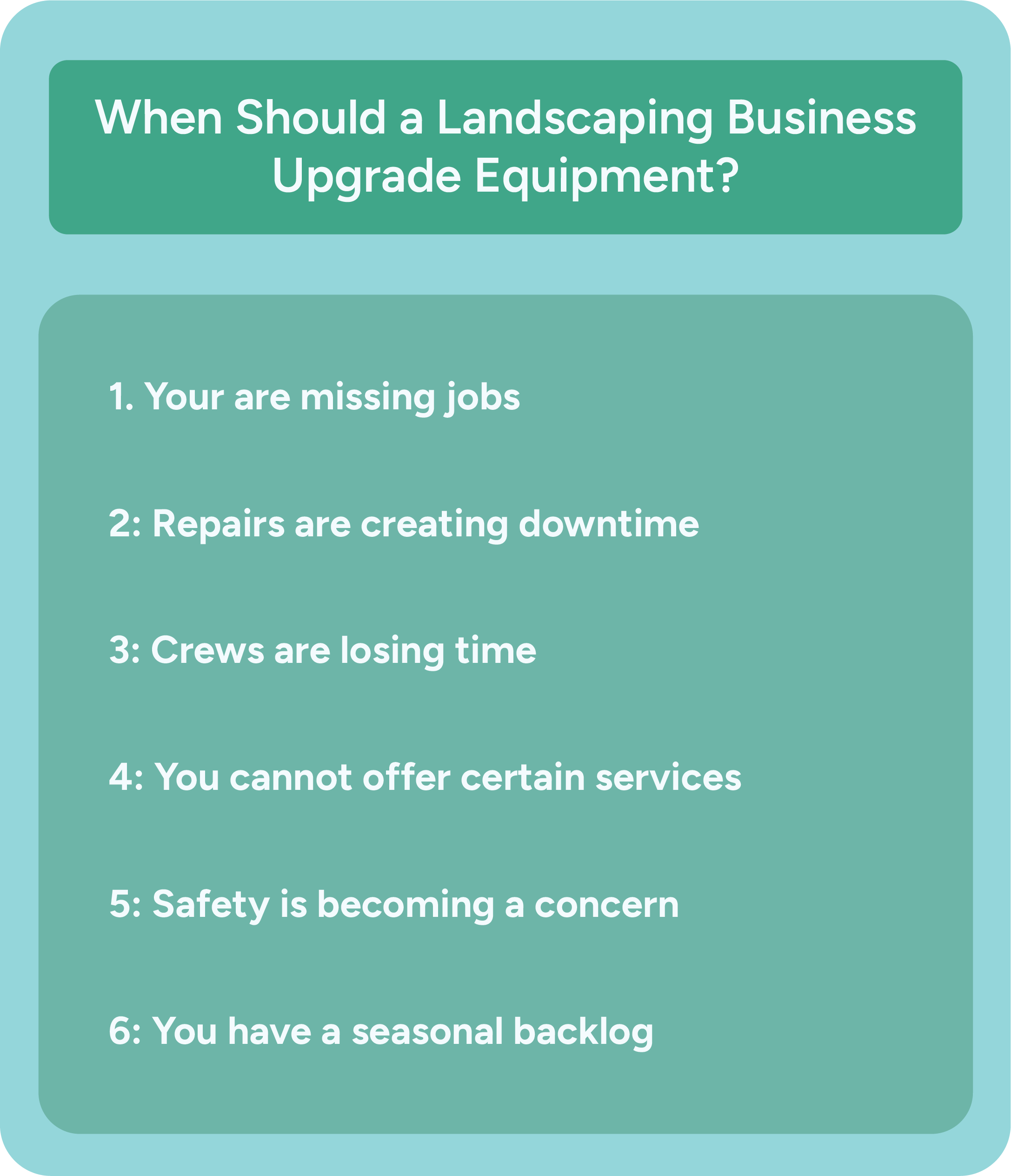
When Should a Landscaping Business Upgrade Equipment?
There is no single answer for when a landscaping business should upgrade. The right timing depends on the equipment, the business, and the work it needs to handle.
There are, however, several signs that an equipment upgrade may be worth considering.
1. You Are Missing Jobs
If your current equipment limits the number or type of jobs you can complete, it may be holding back your business.
For example, a landscaping company may have more customers requesting weekly lawn care than its current mower fleet can handle. Adding another commercial mower could give the business additional capacity.
The same applies to larger landscaping projects. If customers are asking for services that require equipment you do not have, adding the right equipment could open the door to additional work.
2. Repairs Are Creating Downtime
Every piece of equipment requires maintenance, but frequent repairs can become a problem when they interfere with scheduled work.
Consider how often equipment is unavailable and what happens when it is.
Does a crew have to wait for another mower? Are jobs being rescheduled? Are employees spending time dealing with equipment problems instead of completing work?
If equipment downtime is becoming a regular issue, replacing an older machine may make more sense than continuing to rely on it.
3. Crews Are Losing Time
Equipment that is too small, too slow, or not designed for the work being performed can affect crew efficiency.
A business may be able to complete the same job with its existing equipment, but if it takes significantly longer, the equipment may no longer be the right fit.
When considering an upgrade, look at how equipment affects the entire job, from loading and transportation to the work itself.
4. You Cannot Offer Certain Services
Your equipment determines, in part, what your business can offer.
A landscaping company focused primarily on lawn maintenance may eventually want to add services such as grading, material hauling, property cleanup, or snow removal.
Those services can require different equipment.
Adding the right equipment can give a business the ability to expand its service offerings rather than turning away work because it does not have the necessary tools.
5. Safety Is Becoming a Concern
Older or poorly maintained equipment can create safety concerns for crews.
If equipment has recurring mechanical issues, does not operate as expected, or no longer meets the needs of the work being performed, it is worth evaluating whether replacement is appropriate.
Safety should always be considered alongside cost, productivity, and equipment needs.
6. You Have a Seasonal Backlog
A growing backlog before or during the busy season can be another sign that your current equipment setup needs to change.
If your crews are booked out and equipment is consistently the limiting factor, adding capacity may help you keep up with demand.
Planning the upgrade before peak season can also give you more time to select equipment and review equipment financing options.
Upgrade Scenario #1: Replacing a Commercial Mower
Mowers are some of the most important equipment for many landscaping businesses.
If a mower is frequently breaking down, requiring expensive repairs, or slowing down your crews, replacing it may be worth considering.
A replacement mower can provide an opportunity to evaluate whether your current equipment still matches the business.
Ask:
- How many hours is the mower being used?
- How often does it require repairs?
- How much downtime has it caused?
- Is the mower large enough for the properties you service?
- Are your crews taking longer to complete jobs than they used to?
- Would a newer or higher-capacity mower allow you to handle more work?
If the answer to several of these questions points toward an upgrade, it may be time to explore your options.
For a business that relies heavily on lawn maintenance, a mower is not simply another equipment purchase. It is a tool that crews use to complete revenue-producing work.
Upgrade Scenario #2: Adding a Dump Trailer
A landscaping business may eventually reach a point where hauling materials becomes a limiting factor.
A dump trailer can help with jobs involving mulch, soil, debris, landscaping materials, and cleanup.
Adding a dump trailer may make sense when:
- Crews are making multiple trips to complete a job
- Existing trailers do not provide enough capacity
- Employees are spending too much time loading and unloading
- The business is taking on larger landscaping projects
- Material hauling is becoming a regular part of the business
Before purchasing, consider how often the trailer will be used and what capacity the business actually needs.
A dump trailer can be a significant equipment purchase, so landscaping owners should consider the expected use alongside the monthly payment and other business expenses.
Upgrade Scenario #3: Adding Compact Equipment
As landscaping companies take on larger projects, handheld equipment and standard lawn care equipment may not be enough.
Compact loaders, skid steers, and other compact equipment can help businesses handle jobs involving material movement, grading, excavation, cleanup, and other demanding tasks.
Adding compact equipment can be particularly relevant when a landscaping business is:
- Taking on larger properties
- Adding new services
- Handling more commercial work
- Spending too much time moving materials manually
- Renting equipment frequently for specific jobs
If the business is regularly renting the same type of equipment, it may be worth comparing the cost and convenience of adding that equipment to the company's own fleet.
Upgrade Scenario #4: Expanding Into Commercial Landscaping
Commercial landscaping can bring different equipment requirements than smaller residential jobs.
Larger properties may require more mowing capacity, additional transportation equipment, compact equipment, and other tools to keep crews productive.
Before expanding into commercial work, consider whether your current equipment can handle the expected workload.
You may need to account for:
- Larger or additional mowers
- Additional trailers
- Compact equipment
- Attachments
- Snow equipment
- Additional maintenance equipment
Equipment should be considered as part of the overall requirements of the work. Taking on larger contracts without the necessary equipment can put additional pressure on crews and schedules.
How Can New Equipment Help a Landscaping Company Take More Jobs?
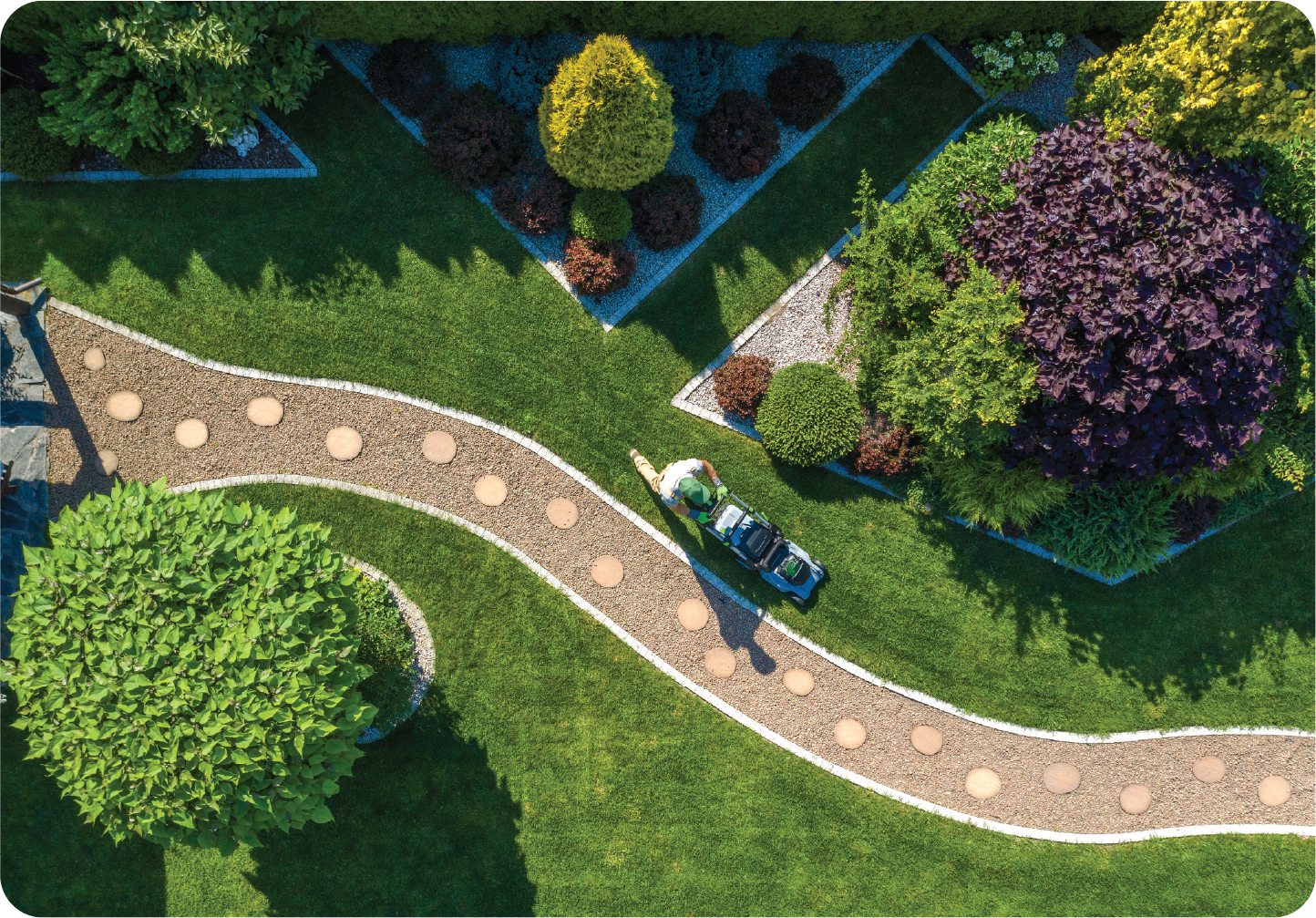
The value of an equipment upgrade is not simply the equipment itself. It is what the business can do with it.
A new mower may allow another crew to operate at the same time. A dump trailer may reduce the number of trips needed for a project. A compact loader may make larger jobs practical.
When evaluating an upgrade, consider what changes after the equipment is added.
For example:
Before: One crew shares equipment between multiple job sites.
After: Additional equipment allows crews to work at the same time.
Or:
Before: A crew makes several trips to move materials.
After: Additional hauling capacity helps the crew move more material in fewer trips.
The exact impact will vary by business, but thinking about the equipment in terms of the work it supports can help owners make a more informed decision.
What Should Landscaping Owners Consider Before Upgrading?
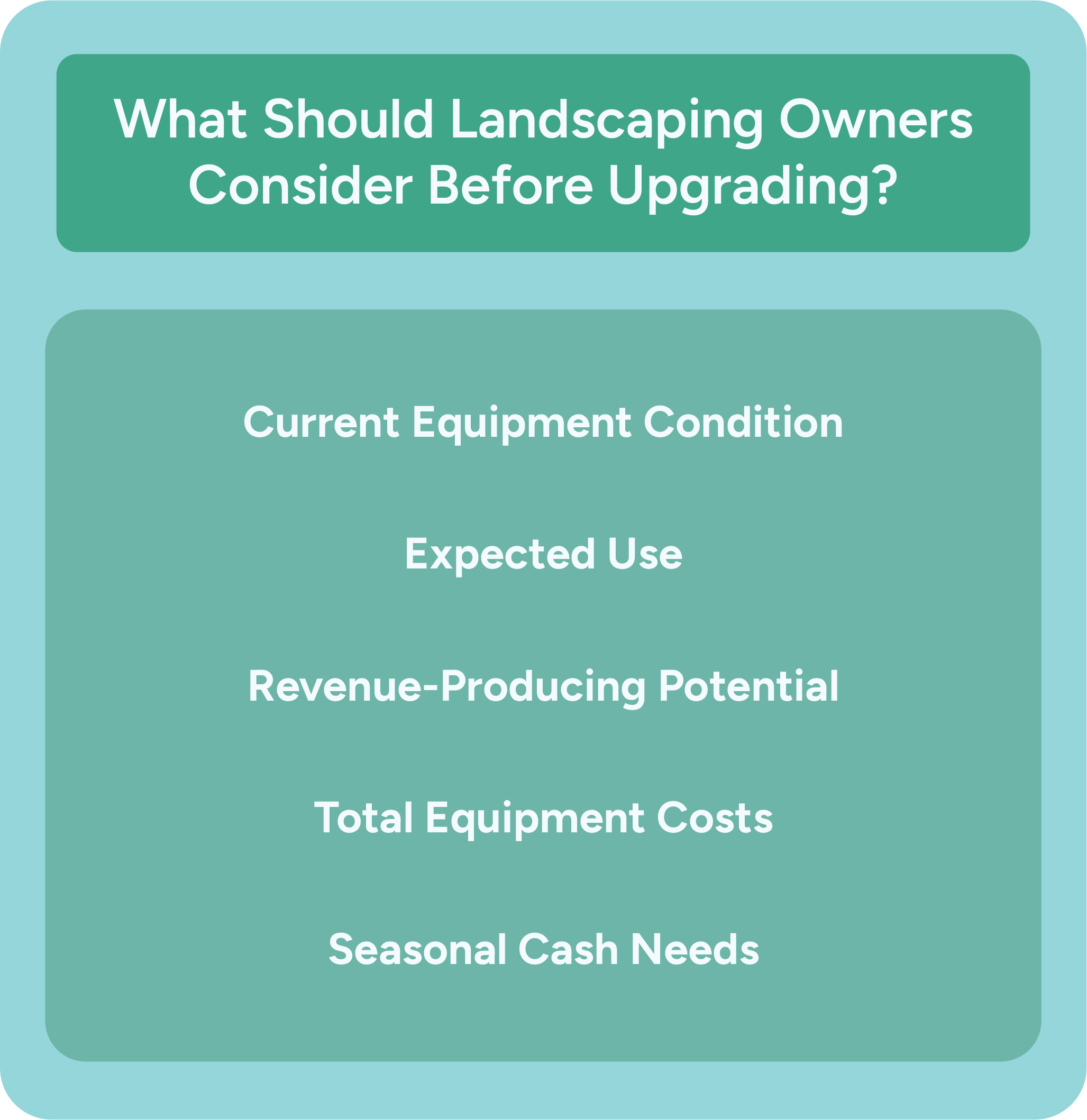
An equipment upgrade is a business decision, so it is worth looking beyond the purchase price.
Current Equipment Condition
How much longer can your current equipment reasonably support the business? Consider repair history, downtime, age, and performance.
Expected Use
How frequently will the new equipment be used? Equipment that sits unused for most of the year may require a different approach than equipment used every day.
Revenue-Producing Potential
Consider whether the equipment will help complete existing work more efficiently, support additional jobs, or allow the business to offer new services.
Total Equipment Costs
The purchase price is only one part of owning and operating equipment. Consider maintenance, fuel, insurance, storage, and other ongoing expenses.
Seasonal Cash Needs
Landscaping businesses may need available cash for payroll, fuel, insurance, maintenance, and marketing, particularly around their busiest seasons.
A large equipment cost can compete with those expenses for available cash.
How Equipment Financing Can Help With an Upgrade
Equipment financing can give landscaping businesses another way to approach getting equipment while keeping more cash available for other business expenses.
With business equipment leasing, the transaction is centered on eligible business equipment rather than providing generic cash funding.
For a landscaping company, that could mean leasing eligible equipment such as a commercial mower, dump trailer, compact equipment, or other equipment needed for the business.
Clicklease offers business equipment leasing with fixed monthly payments and fixed lease terms for customers who qualify.
That payment structure can help landscaping owners plan for the equipment expense while keeping cash available for expenses such as:
- Payroll
- Fuel
- Insurance
- Maintenance
- Marketing
- Other operating costs
The right equipment financing option will depend on the equipment, the business, and the customer's qualifications, so it is important to review the applicable terms before moving forward.
Plan Equipment Upgrades Before You Need Them
Equipment problems rarely happen at a convenient time.
For a landscaping business, discovering that a mower needs a major repair during peak season can create a much bigger problem than identifying the need for replacement beforehand.
That is why it can be useful to review your equipment before the busiest part of the year.
Look at your current fleet and ask:
- Which equipment is creating the most downtime?
- What equipment needs frequent repairs?
- What work are we turning away?
- What services could we add with the right equipment?
- Do we need more capacity for the upcoming season?
- Which equipment purchases should we plan for now?
Answering these questions can help you identify upgrades before they become emergencies.
Get More From Your Equipment Investment
A landscaping equipment upgrade should start with a business need.
Maybe an older mower is creating too much downtime. Maybe your crews need additional capacity. Maybe a dump trailer would make hauling materials easier. Or maybe your business is ready to take on commercial landscaping work and needs equipment to support larger projects.
Once you understand why the upgrade is needed, look at the equipment that can address that need and consider how the equipment cost fits into your overall business expenses.
Equipment financing can provide another way to access eligible business equipment through fixed lease terms while keeping cash available for other needs.
With Clicklease, landscaping businesses can explore business equipment leasing for eligible equipment and get the equipment they need to keep their crews working and their business moving forward.