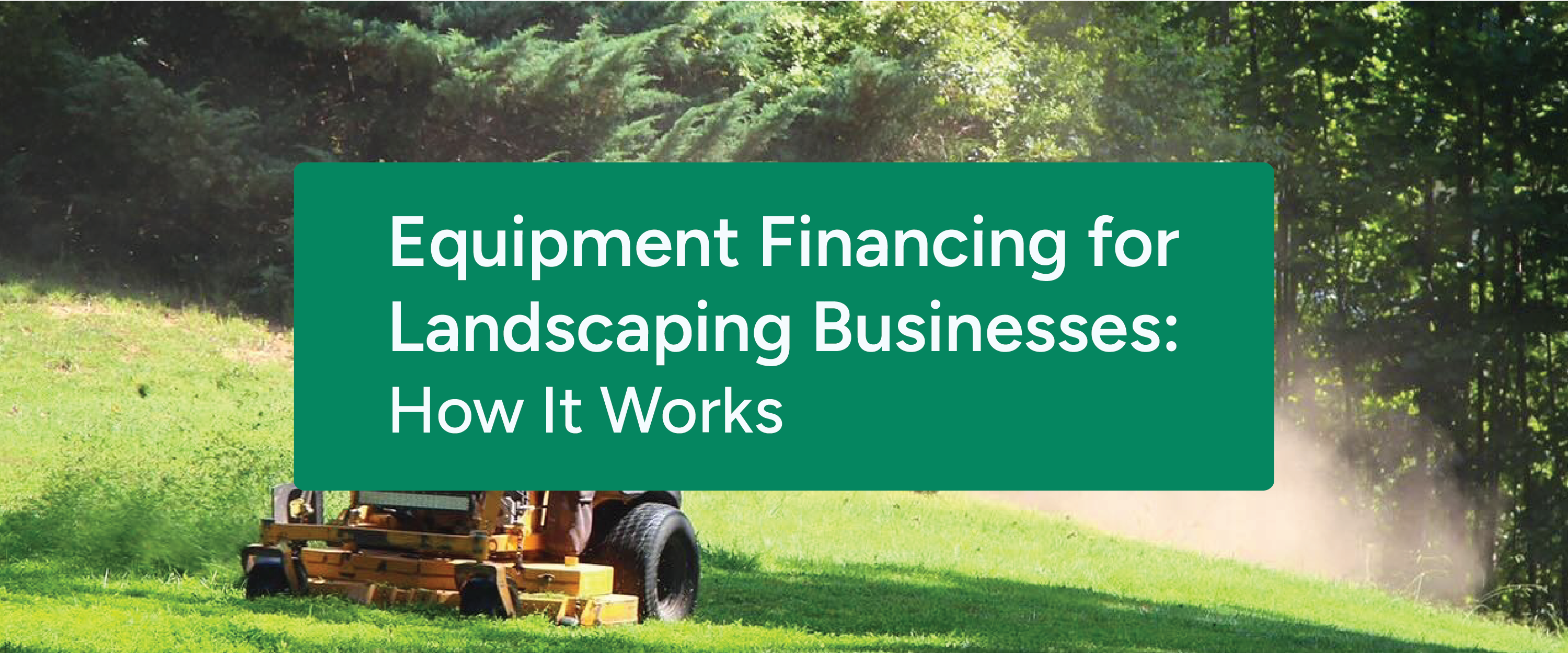
Equipment Financing for Landscaping Businesses: How It Works
Landscaping businesses depend on their equipment to keep jobs moving. A commercial mower needs to be ready for the next property. A trailer needs to be available when a crew heads to a new job. A skid steer or compact loader can make larger projects possible.
When equipment needs to be replaced, upgraded, or added to the fleet, the cost can be a major consideration. Landscaping businesses also have other expenses competing for available cash, especially during busy seasons.
Equipment financing can give landscaping businesses another way to get the equipment they need while keeping cash available for other business expenses.
So, how does equipment financing work for a landscaping business? It starts with identifying the equipment needed, reviewing equipment financing options, completing an application, and choosing an option that fits the business.
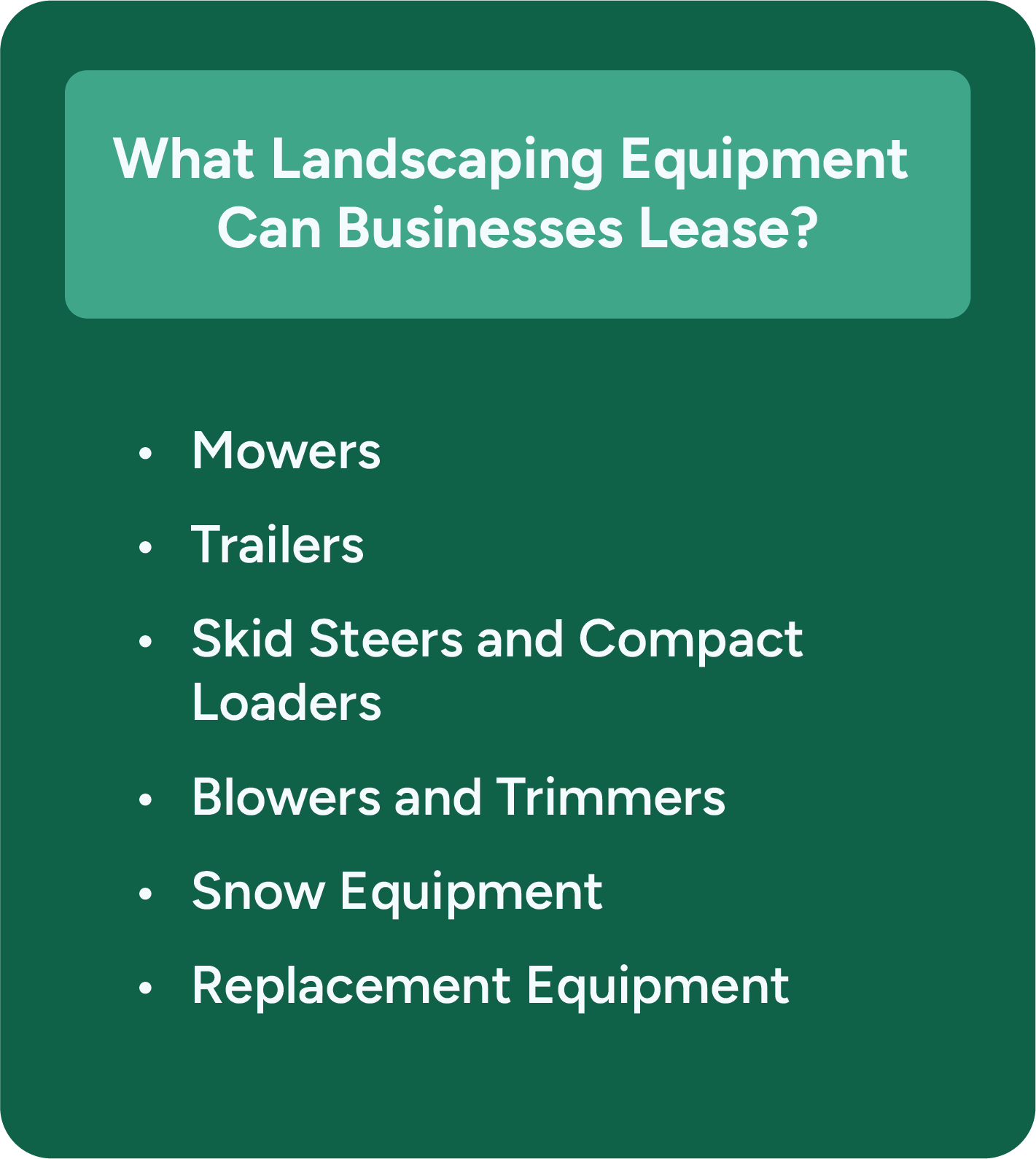
What Landscaping Equipment Can Businesses Lease?
Landscaping businesses use a wide range of equipment, from everyday lawn care tools to larger machines used for commercial and property maintenance.
Depending on the business and the equipment seller, equipment that may be eligible for business equipment leasing can include:
Mowers
Commercial mowers are essential for many landscaping businesses. Businesses may need to replace aging mowers, add another mower for a growing crew, or move into higher-capacity equipment as their workload increases.
Trailers
Trailers help landscaping crews transport equipment, materials, and tools from one job to another. A business may need a new trailer when adding equipment or expanding its service area.
Skid Steers and Compact Loaders
Larger landscaping and property maintenance projects can require equipment capable of moving soil, mulch, debris, and other materials. Skid steers and compact loaders can provide additional capacity for these jobs.
Blowers and Trimmers
Blowers, trimmers, edgers, and similar equipment are everyday tools for many landscaping crews. These transactionss can also add up when a business needs enough equipment for multiple crews.
Snow Equipment
For landscaping companies that provide snow removal during the winter, snow equipment can be an important part of the business. Plows, spreaders, snow blowers, and other equipment can help businesses prepare for seasonal work.
Replacement Equipment
Equipment does not always need to be completely worn out before a business starts considering a replacement. Frequent repairs, downtime, reduced productivity, or increasing job demands can all be reasons to evaluate whether existing equipment is still meeting the business's needs.
The equipment available for leasing will depend on the specific transaction and qualification requirements.
How Does Equipment Financing Work for Landscaping Companies?
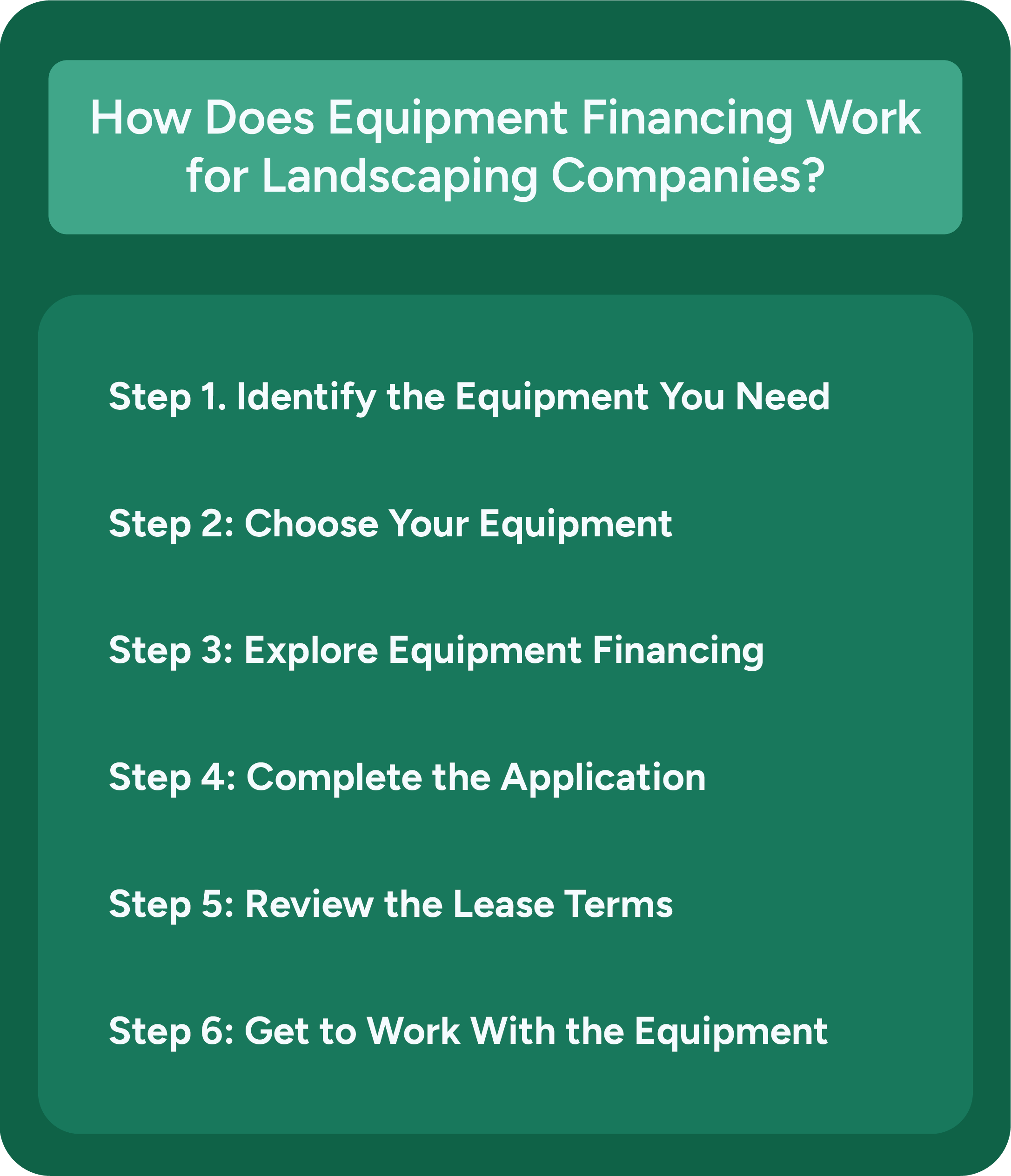
Equipment financing is designed around specific business equipment transactions. Rather than providing generic cash for a business to use however it wants, business equipment leasing is used to acquire eligible equipment for the business.
The process can be broken down into a few straightforward steps.
Step 1: Identify the Equipment You Need
Start with the equipment that is necessary for the business.
Maybe an existing mower is no longer keeping up with the workload. Maybe a landscaping company has added a new crew and needs another trailer. Or perhaps a new contract requires equipment the business does not currently have.
Understanding the specific equipment need gives the business a clear starting point.
Step 2: Choose Your Equipment
Once the business knows what it needs, work with an equipment seller to select the right equipment for the job.
Consider factors such as:
- The type of work the equipment will handle
- How frequently it will be used
- The capacity needed
- Whether the equipment will be used by one crew or multiple crews
- Whether the transactions is replacing existing equipment or adding to the fleet
The goal is to choose equipment based on the business's actual needs rather than simply choosing the lowest-cost option.
Step 3: Explore Equipment Financing
Once the equipment has been selected, the business can explore equipment financing options.
This is a good point to look at the payment structure and determine how the equipment transactions fits into the business's budget.
With Clicklease, landscaping businesses can apply for business equipment leasing through participating equipment sellers.
Step 4: Complete the Application
The customer completes the equipment financing application and provides the information needed for the application process.
The application is reviewed based on the applicable qualification requirements, and the customer receives a decision.
If approved, the customer can review the available lease terms before moving forward.
Step 5: Review the Lease Terms
Before agreeing to a lease, customers should understand the terms of the agreement.
This can include:
- Monthly payment amount
- Lease term
- Payment schedule
- Other applicable costs or terms
- Options available at the end of the lease
Understanding these details helps the customer know what to expect throughout the lease.
Step 6: Get to Work With the Equipment
After the lease is completed and the equipment transaction is finalized, the business can put the equipment to work.
For a landscaping company, that could mean getting a replacement mower into service before existing equipment creates more downtime, adding a trailer for a new crew, or putting a skid steer to work on a new type of project.
The equipment is the focus of the transaction, with equipment financing helping the business approach the transactions through scheduled payments.
How Can Fixed Monthly Payments Help With Seasonal Cash Flow?
Landscaping businesses often have expenses that change throughout the year.
A business may have higher payroll costs when seasonal crews are working. Fuel costs can increase as crews travel between jobs. Equipment may need maintenance or repairs. At the same time, a new contract may require an investment in additional equipment.
A large equipment transactions can compete with those expenses for available cash.
Fixed monthly payments can make the equipment expense easier to plan for because the business knows the scheduled payment amount rather than having to account for the entire equipment transactions upfront.
For example, consider a landscaping company preparing for its busiest months.
The company needs another commercial mower and trailer to support additional work. At the same time, it needs cash available for seasonal employees, fuel, maintenance, and other operating expenses.
Equipment financing can allow the business to put the needed equipment into service while paying according to the agreed-upon lease terms.
The equipment can then be used for the work it was transactionsd to perform while the business keeps more of its available cash for other expenses.
Why Equipment Timing Matters for Landscapers
Landscaping equipment is often directly connected to the work a business can take on.
If a mower is unavailable, a crew may not be able to complete its route. If a business does not have the right trailer, transporting equipment can become more difficult. If a larger contract requires equipment the business does not have, the company may need to determine how to acquire it before the work begins.
That makes equipment timing an important consideration.
Instead of waiting until equipment becomes an emergency, landscaping businesses can evaluate their equipment needs ahead of their busiest periods.
Preseason planning can give businesses time to:
- Identify equipment that needs to be replaced
- Determine whether additional equipment is needed
- Review equipment options
- Talk with equipment sellers
- Explore equipment financing
- Plan for the associated monthly payments
This approach can make the equipment purchasing process more straightforward and give the business more time to prepare.
Preserving Cash for Other Business Expenses
Equipment is only one part of running a landscaping company.
Businesses may also need cash for:
Seasonal crews: Hiring additional employees can help businesses handle increased demand during busy months.
Fuel: More jobs and longer routes can increase fuel expenses.
Maintenance: Equipment, vehicles, and other business assets require ongoing maintenance.
Larger contracts: Taking on a larger project may require additional labor, materials, or equipment before the business receives payment for the completed work.
Equipment financing can help businesses approach equipment transactionss without using all of their available cash on the equipment itself.
This does not mean every business should use equipment financing for every transactions. The right approach depends on the equipment, the business, its budget, and the available equipment financing options.
Business Equipment Leasing With Clicklease
Clicklease provides business equipment leasing for eligible equipment transactionss.
For landscaping businesses, that can mean another way to approach transactionss such as mowers, trailers, compact equipment, snow equipment, and other eligible business equipment.
The process is centered around the equipment the business needs. Customers can work with participating equipment sellers, apply for equipment financing, receive a decision, and review the applicable lease terms.
With fixed monthly payments and fixed lease terms, customers can have a clear payment structure for the equipment transactions.
Getting the Equipment Your Landscaping Business Needs

Landscaping businesses rely on their equipment every day. When equipment needs to be replaced, upgraded, or added, understanding the available options can make the purchasing process easier.
Equipment financing can provide another way for landscaping businesses to approach eligible equipment transactionss while keeping cash available for other business needs.
Start with the equipment. Consider what the business needs now and what it may need for the upcoming season. Then explore equipment financing options and review the lease terms carefully before making a decision.
With Clicklease, landscaping businesses have another way to access eligible business equipment through a simple leasing process and fixed monthly payments.