How to Start a Medical Equipment Business: A Growth Guide for Sellers
The medical equipment industry continues to grow as healthcare providers invest in new technology, expand services, and replace aging equipment. From independent clinics to dental offices, physical therapy practices, veterinary clinics, and specialty medical providers, businesses rely on quality equipment to deliver better patient care.
For entrepreneurs, that creates an opportunity. If you've been wondering how to start a medical equipment business, success comes down to understanding your market, choosing the right products, building strong supplier relationships, and making it easy for customers to get the equipment they need.
Here's what it takes to build a successful medical equipment supply business.
Is Selling Medical Equipment a Good Business?
For many entrepreneurs, the answer is yes.
Healthcare is one of the most stable industries in the economy. Providers consistently need new equipment to grow, replace outdated technology, or improve patient experiences. While purchasing cycles may be longer than in some industries, equipment purchases are often high value, creating meaningful revenue opportunities for sellers.
Medical equipment businesses can also build recurring revenue through service plans, maintenance agreements, replacement parts, accessories, and long term customer relationships.
Success depends on finding the right niche and becoming a trusted partner instead of simply selling products.
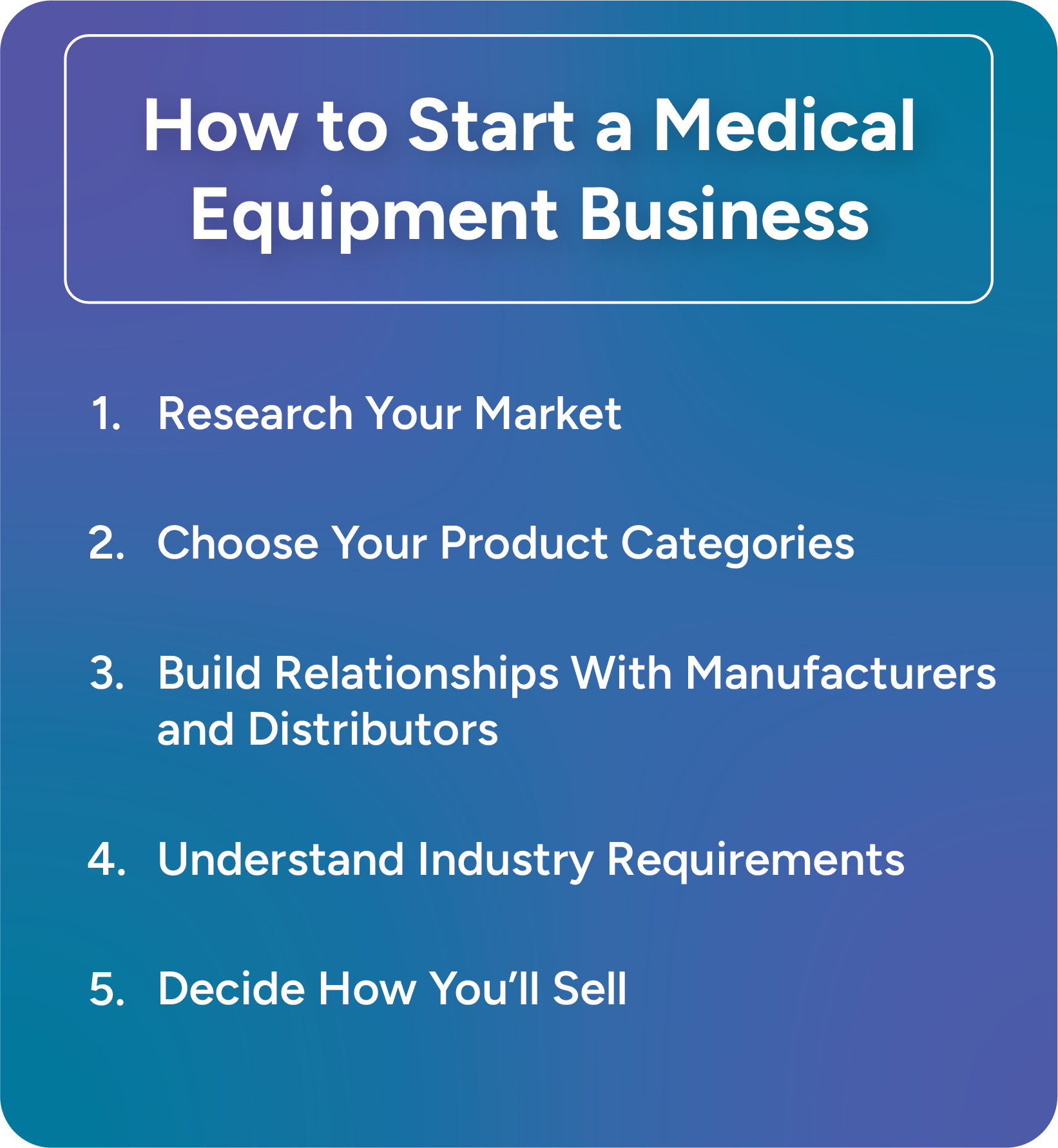
How to Start a Medical Equipment Business
If you're researching how to start a medical equipment supply business, these are the foundational steps.
1. Research Your Market
Before choosing products, understand who you'll serve.
Ask questions like:
- Which healthcare businesses are growing in my area?
- What equipment do they regularly purchase?
- Are there underserved specialties or emerging markets?
- Who are my competitors?
Many successful sellers focus on serving one customer segment before expanding.
Examples include:
- Dental offices
- Chiropractic clinics
- Physical therapy practices
- Veterinary clinics
- Primary care practices
- Surgery centers
- Home healthcare providers
- Medical spas
The better you understand your customers, the easier it becomes to recommend equipment that solves real business problems.
2. Choose Your Product Categories
Medical equipment covers an enormous range of products. Rather than trying to sell everything, many businesses specialize.
Popular equipment categories include:
- Diagnostic equipment
- Imaging systems
- Patient monitoring equipment
- Treatment tables and exam tables
- Sterilization equipment
- Laboratory equipment
- Medical furniture
- Rehabilitation equipment
- Dental equipment
- Veterinary equipment
Specialization helps you become an expert in your category while building stronger supplier relationships.
3. Build Relationships With Manufacturers and Distributors
Reliable suppliers are essential.
Strong supplier partnerships can provide:
- Better pricing
- Product training
- Marketing resources
- Warranty support
- Faster shipping
- Inventory availability
Customers expect medical equipment sellers to answer technical questions and stand behind the products they recommend.
The stronger your supplier relationships, the easier it is to provide that confidence.
4. Understand Industry Requirements
Medical equipment comes with unique responsibilities.
Depending on the products you sell, you may need to understand:
- Product certifications
- Warranty requirements
- Manufacturer guidelines
- Shipping and handling procedures
- Installation requirements
- Service expectations
While many sellers don't manufacture equipment themselves, customers still expect knowledgeable guidance throughout the buying process.
5. Decide How You'll Sell
Today's medical equipment buyers research products long before speaking with a salesperson.
Many successful businesses combine multiple sales channels, including:
- An ecommerce website
- Outside sales representatives
- Inside sales teams
- Industry trade shows
- Digital marketing
- Referral partnerships
- Manufacturer leads
Building an online presence also helps customers compare products, request quotes, and begin conversations before they're ready to buy.
Can I Sell Medical Equipment to Practices or Businesses?
Absolutely.
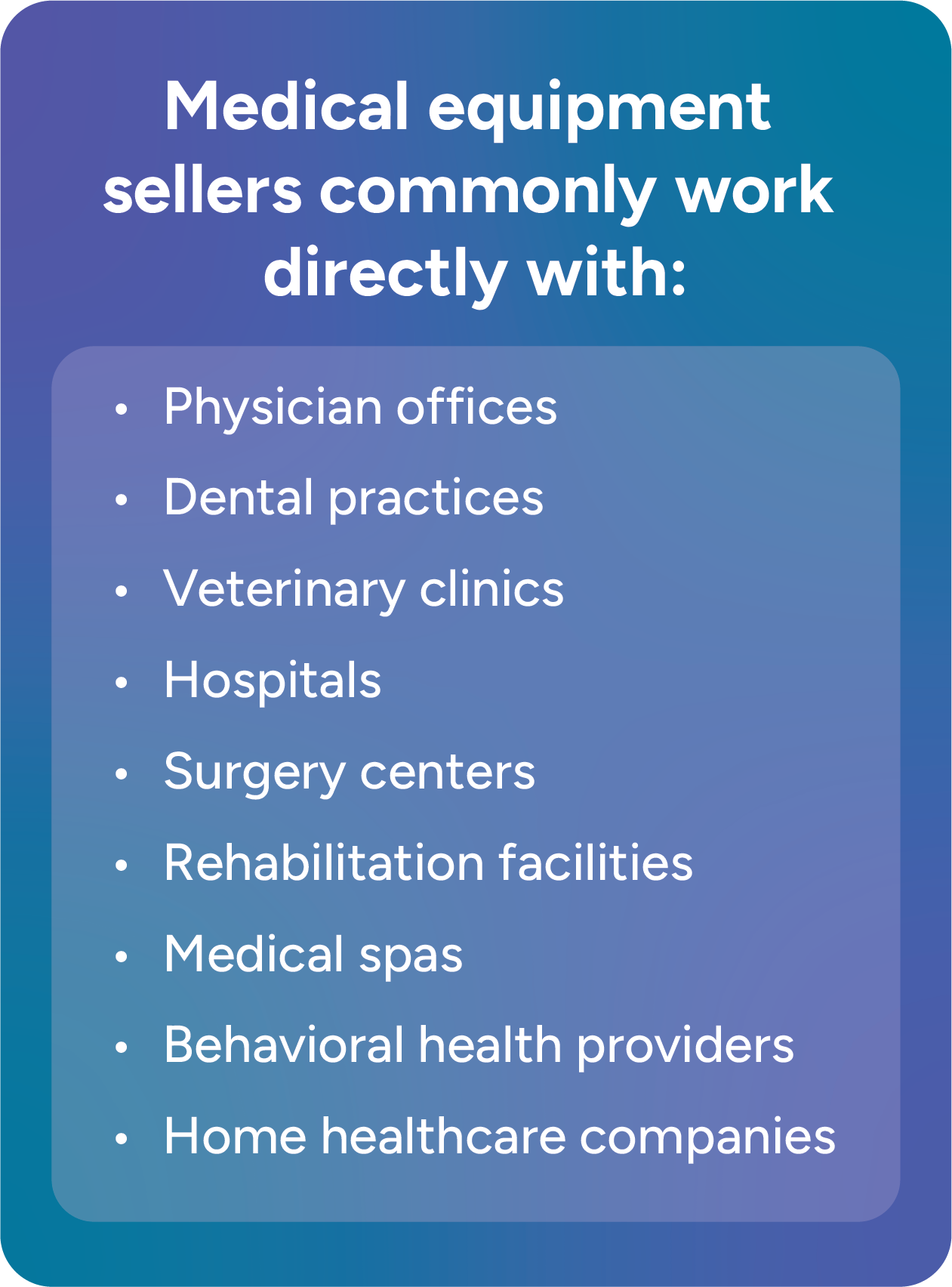
Medical equipment sellers commonly work directly with:
- Physician offices
- Dental practices
- Veterinary clinics
- Hospitals
- Surgery centers
- Rehabilitation facilities
- Medical spas
- Behavioral health providers
- Home healthcare companies
Every business has different purchasing needs, budgets, and decision processes. Understanding how each customer evaluates equipment purchases helps you tailor your sales approach.
Building Trust Matters More Than Selling
Healthcare providers aren't simply buying equipment. They're investing in tools that support patient care and business growth.
That means trust becomes one of your biggest competitive advantages.
You can build credibility by:
- Learning the products inside and out
- Responding quickly to customer questions
- Providing honest recommendations
- Offering installation or training resources
- Following up after the sale
- Helping customers plan for future equipment needs
The goal isn't just one transaction. It's becoming the first call when they need equipment again.
Equipment Financing Can Help You Close More Sales
Medical equipment often represents a significant investment.
Even profitable healthcare businesses may hesitate to spend thousands or tens of thousands of dollars upfront, especially if they're opening a new location, expanding services, or managing cash flow.
Offering equipment financing gives customers another path forward.
Instead of delaying purchases while saving capital, businesses can acquire equipment sooner and preserve cash for payroll, inventory, marketing, or other operating expenses.
For sellers, leasing can help:
- Reduce price objections
- Shorten sales cycles
- Increase average order values
- Improve customer satisfaction
- Help buyers get the equipment they actually need instead of settling for less
When leasing is part of the conversation early, customers can focus more on finding the right equipment rather than whether they can afford the upfront cost.
How Clicklease Helps Medical Equipment Sellers
Selling medical equipment is already complex. Equipment financing shouldn't make it harder.
Clicklease helps equipment sellers offer commercial equipment financing through a simple application process designed for business leasing.
Rather than sending customers elsewhere to figure out equipment financing on their own, sellers can introduce equipment financing as part of the buying experience. That helps keep deals moving while giving customers another option for acquiring the equipment their business needs.
For medical equipment sellers, offering equipment financing can help:
- Reach more qualified buyers
- Reduce abandoned sales
- Increase equipment upgrades
- Create a smoother purchasing experience
- Differentiate your business from competitors
When customers have simple ways to get equipment, they're more likely to move forward with confidence.
Final Thoughts
Starting a medical equipment business takes planning, industry knowledge, and strong customer relationships. By choosing the right market, partnering with trusted suppliers, building expertise, and creating an easy buying experience, you can establish a business that continues to grow over time.
Adding leasing to your sales process is another way to remove barriers for customers. When healthcare providers have access to the equipment they need without tying up valuable cash, everyone benefits. Sellers close more deals, customers get the equipment they need, and practices can continue investing in better care for the communities they serve.