How to Start a Coffee Shop: Your Business Starter Kit
If you’ve ever dreamed of serving lattes, espresso shots, and cold brew to a loyal crowd—now’s the time to turn that vision into reality. Coffee shops are one of the most consistently popular small business ventures, and with the right strategy, you can launch your own shop with confidence.
In this starter kit, we break down everything you need to understand how to start a coffee shop, what supplies and equipment are required, and how to take each step in a clear, achievable order so you feel empowered to move forward.
Whether you’re just starting to explore how to open a coffee shop or you want an actionable plan to run one, this guide will walk you through the process in a simple, step-by-step format.
What You Need to Know Before Opening a Coffee Shop
Coffee shops are more than a place to grab a drink—they’re community hubs where people gather, work, socialize, and unwind. Because of that, they remain one of the most enduring small business concepts in the U.S. But that popularity also means competition is strong and planning is essential.
Before you jump in, understand that success requires:
- A clear vision for your business
- A solid plan for operations and costs
- The right equipment and supplies
- Smart marketing and pricing
- Proper licenses and permits
With preparation, you can launch a coffee shop that delights customers and builds steady revenue.
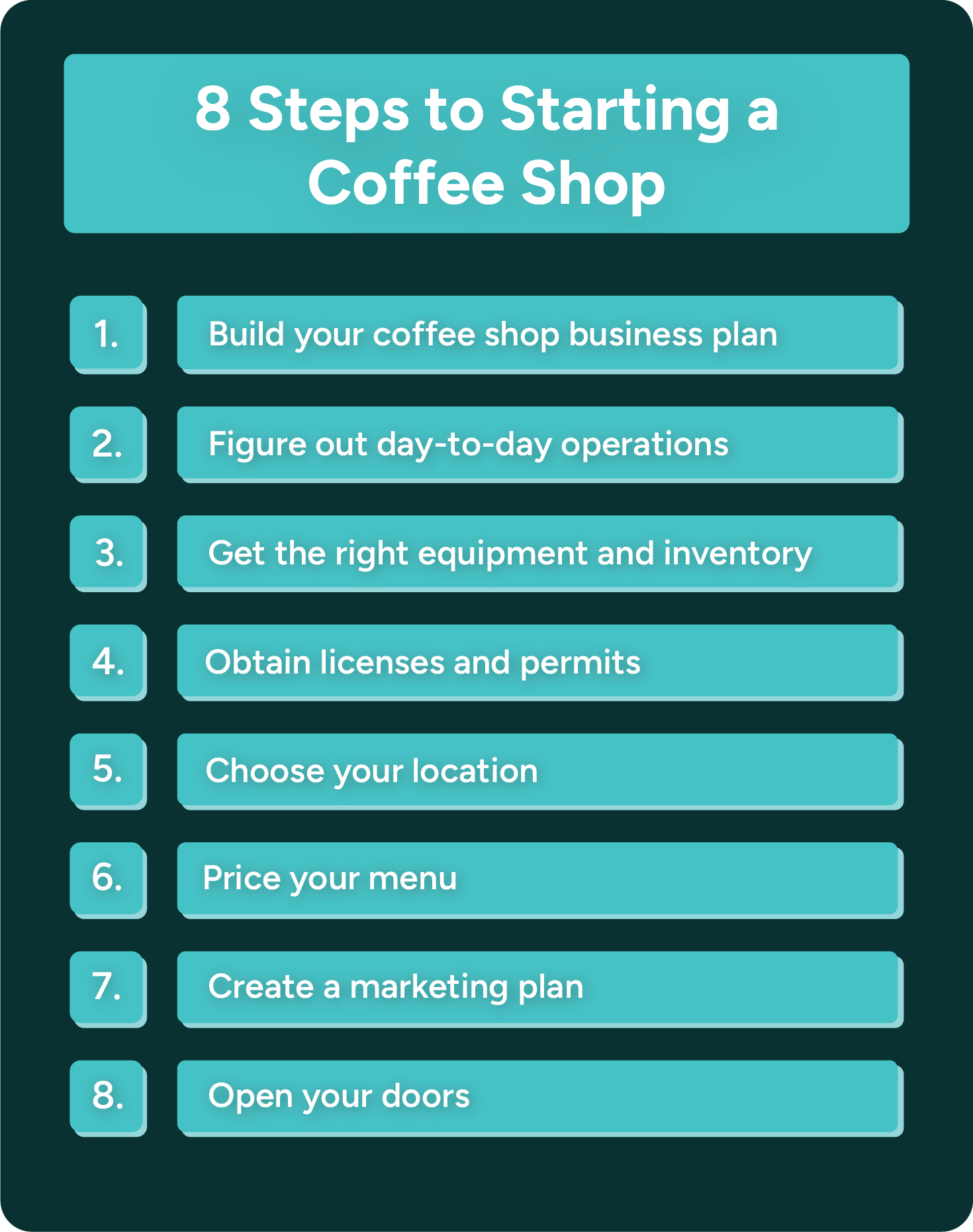
Step 1: Build Your Coffee Shop Business Plan
Your coffee shop business plan is your roadmap. It ties your goals to concrete action and helps you make smarter decisions throughout the launch process.
Your plan should include the following:
- Your coffee shop concept and mission
- A description of your target customers
- A list of the products and services you plan to offer
- A summary of your marketing strategy
- Financial projections for revenue and expenses
Taking time to plan now can save headaches later and give you a clearer picture of what you need when opening a coffee shop.
Step 2: Figure Out Day-to-Day Operations
Think about how your coffee shop is going to run every single day. This includes:
- The equipment you’ll need
- Supplies you’ll carry
- Staff roles and responsibilities
- Maintenance and sanitation routines
Understanding these operational details not only helps with planning but also groups your workload into manageable pieces rather than one overwhelming task.
Step 3: Get the Right Equipment and Inventory
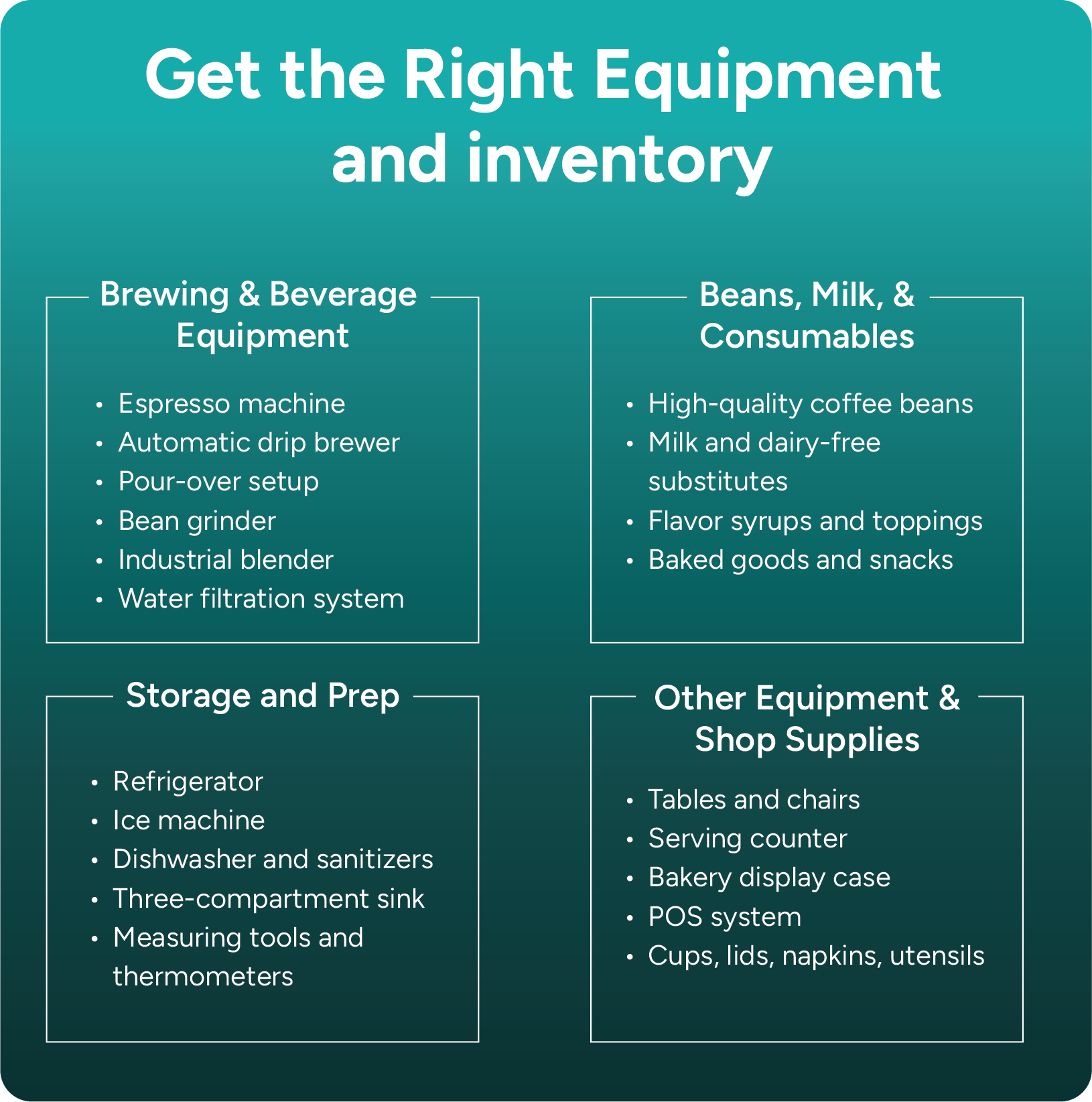
Coffee shops rely on the right tools. While the exact items you need will depend on your concept and menu, here’s a breakdown of the most common essentials:
Brewing and Beverage Equipment
- Espresso machine
- Automatic drip brewer
- Pour-over setup
- Bean grinder
- Industrial blender
- Water filtration system
Storage and Prep
- Refrigerator
- Ice machine
- Dishwasher and sanitizers
- Three-compartment sink
- Measuring tools and thermometers
Beans, Milk, and Consumables
- High-quality coffee beans
- Milk and dairy-free substitutes
- Flavor syrups and toppings
- Baked goods and snacks
Other Equipment and Shop Supplies
- Tables and chairs
- Serving counter
- Bakery display case
- POS system
- Cups, lids, napkins, utensils
Purchase equipment thoughtfully based on your space and menu needs. You don’t always have to buy everything brand-new. Used equipment can be reliable and cost-effective, especially when you’re starting out.
Step 4: Obtain Licenses and Permits
Before you serve your first customer, you must be properly licensed. Requirements vary by city and state, but most coffee shops will need:
- A business registration
- Health department permits
- Food service permits
- Sales tax registration
- Fire and safety inspection approval
Check with your local municipality early in the process so you understand what documentation and costs you’ll need before opening a coffee shop.
Step 5: Choose Your Location
Location can make or break a coffee shop. When scouting spots, keep the following in mind:
- Foot traffic and visibility
- Rent and utility costs
- Nearby competition
- Parking and accessibility
- Lease terms and conditions
In some cases, mobile options like carts or coffee trucks may offer lower startup costs and flexibility compared to a traditional storefront.
Step 6: Price Your Menu
Your pricing strategy should strike a balance between what customers are willing to pay and what you need to cover costs and earn a profit. Look at competitors in your area to get a sense of local pricing norms, and keep your menu simple at first so you can control inventory and waste.
Step 7: Create a Marketing Plan
Marketing isn’t just for “after you open.” Start building buzz early by:
- Sharing your progress on social media
- Optimizing your business listing online
- Taking high-quality photos of your menu items
- Offering loyalty programs or opening specials
A strong marketing plan helps you build a following before you open your doors—and keeps customers coming back after launch.
Step 8: Open Your Doors
After planning, setting up operations, and building anticipation, it’s time to open. Your first customers will remember not just your coffee, but the atmosphere and service. Creating a welcoming environment encourages repeat business and word-of-mouth referrals—both essential in the coffee world.
Is owning a coffee shop profitable?

If you find the right financing solutions, a coffee shop has the potential to be highly profitable. Solid financing can significantly cut initial start-up costs and help your business thrive down the line.
Coffee is a regular part of millions of mornings. As many as 74% of American adults say they drink a cup of coffee daily, with almost half reporting more than just one cup throughout the day. The demand for coffee is there—your cafe only needs to capitalize on it.
While owning a coffee shop can be a very profitable venture, your shop’s total revenue is dictated by many factors, including:
- Your profit margins
- Your daily customers
- Equipment and supply costs
- Your days and hours of operation
- The size of your business
- Operational costs
There is no one-size-fits-all answer to just how profitable your business can be, but there are smart moves you can make at the outset—especially financial ones. The success of your shop often depends on what you’ve invested in it. The more consistent and dedicated you are in your approach, the more likely you are to see profitability sooner rather than later.
How much money do I need to start a coffee business?

If you’re wondering how to start a coffee shop business on a budget or how much funding you’ll need to secure ahead of the launch, consider your unique business goals. Startup costs vary by location and other factors, including whether you are expanding an existing location or starting from scratch with a brand-new storefront.
The type of coffee shop you open is the largest determining factor for your initial expenses. According to a widespread small business cost analysis, you can expect to spend anywhere from $1,500 to $25,000 to add a brew bar to an existing shop or:
- $25,000 to $75,000 to set up in an existing bakery or cafe
- $50,000 to $100,000 for a kiosk, mobile coffee cart, or food truck
- $80,000 to $300,000 for a drive-thru shop or cafe with seating
These costs, of course, vary depending on the type of equipment for your coffee shop, your location, and the particulars of your business plan. Starting a coffee shop requires significant upfront investments. That’s why many coffee shop business plans turn to financing for bigger expenses, such as equipment.
Keep in mind that common startup expenses often include:
- Rent and utilities
- Supplies and inventory
- Hiring and training employees
- Coffee shop equipment
- Marketing and promotion
- Insurance and licensing
Getting Started with Clicklease
One of the biggest hurdles in opening a coffee shop is getting the equipment you need without draining your cash reserves. Limiting up front cash use is where Clicklease can help.
Clicklease offers streamlined equipment financing and leasing options for small businesses, including coffee shops. Instead of tying up all of your startup funds in espresso machines, grinders, brewers, and display cases, you can spread the cost over time with predictable monthly payments. Clicklease’s application process is fast and straightforward, and it supports businesses of all sizes looking to secure the tools they need to launch and grow.
Using Clicklease allows you to:
- Get a decision quickly and see estimated payments
- Preserve working capital for inventory and staffing
- Equip your shop with quality technology and appliances
- Start serving customers faster
See More: Step-by-Step Guide to Applying for a Lease with Clicklease
Whether you’re just sketching out your business plan or ready to order equipment, Clicklease provides an accessible way to move forward with confidence. Ready to get started? Let’s make your coffee shop dream a reality. Apply with Clicklease today and take the next step toward opening your business.