How to Start a Shipping Container Business
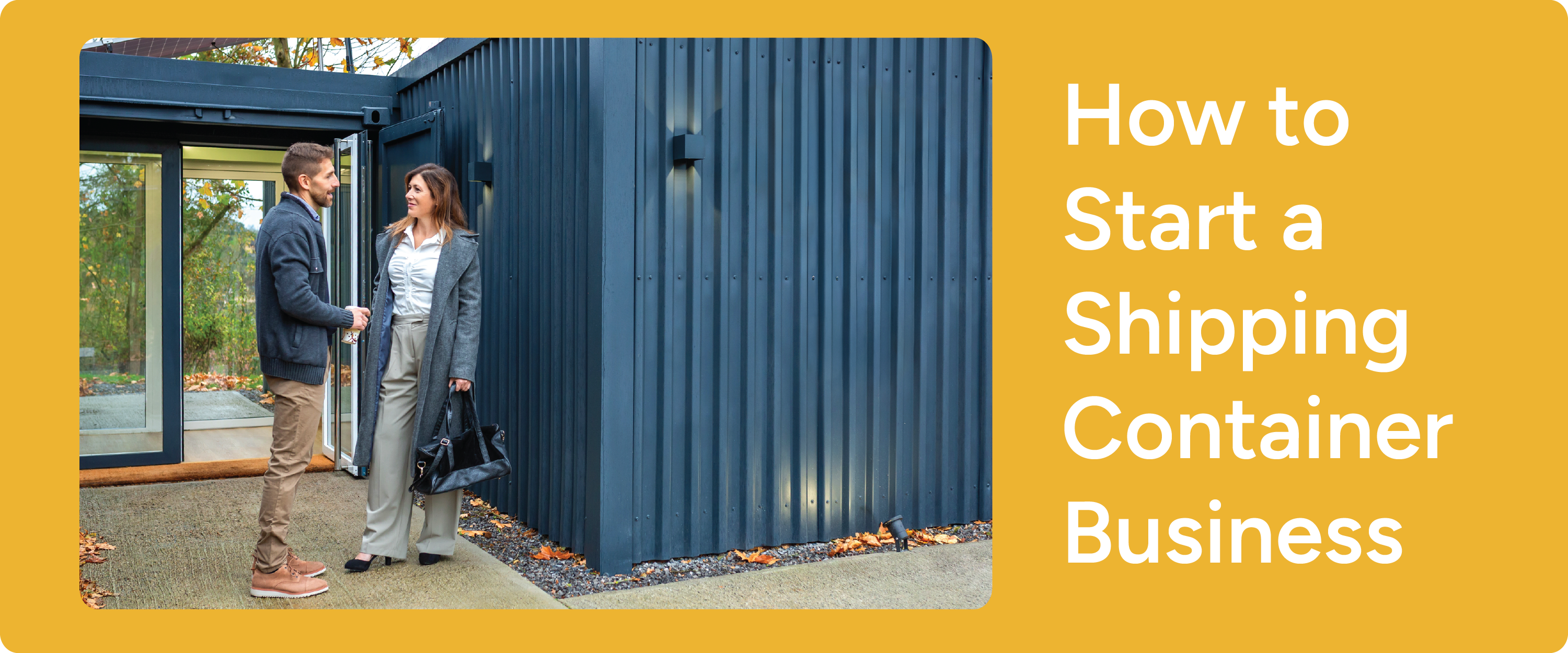
Shipping containers have evolved far beyond their original role in global transportation. Today, they serve as storage units, jobsite offices, retail spaces, workshops, emergency shelters, and even custom commercial structures. As demand for container solutions continues to grow, many entrepreneurs are exploring opportunities to build businesses around container sales, rentals, modifications, and storage services.
Whether you're interested in selling containers, renting them to contractors, or offering custom modifications, understanding the operational requirements and revenue opportunities can help you launch a successful shipping container business.
Why the Shipping Container Industry Appeals to Entrepreneurs
Shipping containers offer several advantages as a business opportunity. Containers are durable, versatile, and useful across a wide range of industries. Construction companies, retailers, agricultural operations, manufacturers, schools, municipalities, and small businesses all use containers for different purposes.
Many container businesses also benefit from multiple revenue streams. A company can sell containers, rent them out, provide delivery services, and offer modifications that increase profitability.
With the right planning and infrastructure, a shipping container business can scale from a small local operation into a regional provider.
How to Start a Shipping Container Business
Starting a shipping container business requires more than simply purchasing inventory. Successful operators develop a clear business model, secure reliable suppliers, establish delivery capabilities, and create a strategy for attracting customers.
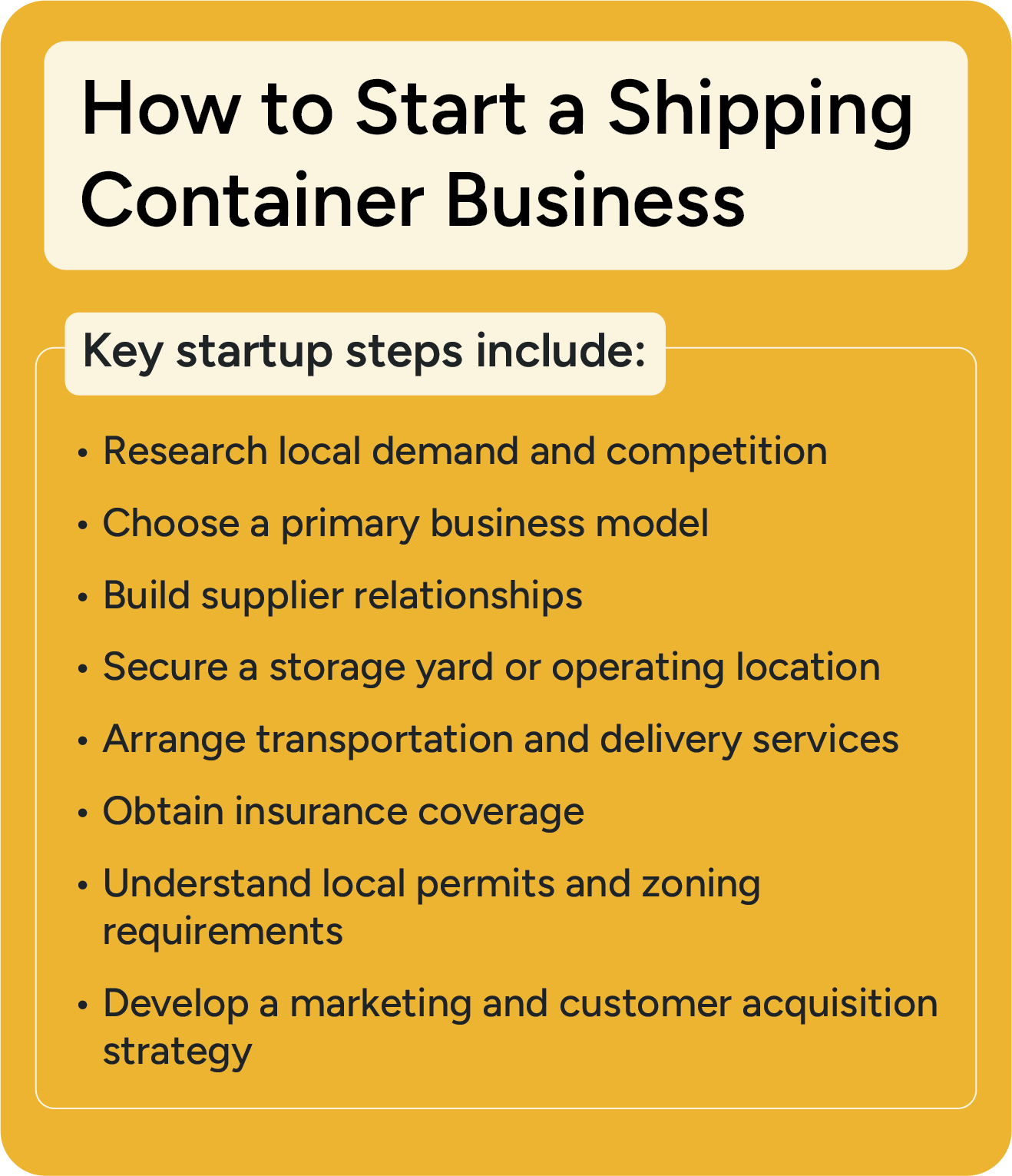
Key startup steps include:
- Research local demand and competition
- Choose a primary business model
- Build supplier relationships
- Secure a storage yard or operating location
- Arrange transportation and delivery services
- Obtain insurance coverage
- Understand local permits and zoning requirements
- Develop a marketing and customer acquisition strategy
Each of these areas plays an important role in long term success.
Choose the Right Shipping Container Business Model
One of the first decisions you'll make is determining how your business will generate revenue.
Container Sales
Selling new and used shipping containers is one of the most straightforward entry points into the industry.
Customers may purchase containers for:
- Construction storage
- Agricultural equipment storage
- Inventory management
- Jobsite offices
- Retail storage
- Personal property storage
Success often depends on maintaining reliable inventory and offering dependable delivery services.
Container Rentals
Rental programs can generate recurring revenue while serving contractors and businesses that only need temporary storage.
Rental containers are commonly used for:
- Construction projects
- Event storage
- Seasonal inventory overflow
- Disaster recovery operations
Rental fleets require ongoing maintenance and logistics coordination, but they can create predictable monthly income.
Container Modification Services
Many businesses purchase containers that require customization.
Popular modifications include:
- Roll up doors
- Windows
- HVAC systems
- Electrical installations
- Security upgrades
- Shelving systems
- Jobsite office conversions
Modification services often provide higher margins than basic container sales and can help differentiate your business from competitors.
Portable Storage Solutions
Portable storage continues to be a growing market segment. Businesses and homeowners frequently need temporary storage delivered directly to their location.
This model combines container inventory management with transportation and logistics expertise.
Jobsite Containers
Construction companies often need secure storage and temporary office space.
Specialized jobsite solutions may include:
- Ground level offices
- Tool storage containers
- Equipment storage units
- Mobile site management offices
Serving contractors can lead to repeat business and long term customer relationships.
Niche Container Conversions
Some businesses focus on specialized container projects such as:
- Pop up retail stores
- Food service structures
- Workshops
- Educational facilities
- Agricultural facilities
- Emergency response units
These projects require additional expertise but can create premium revenue opportunities.
Conduct Market Research Before Investing
Before purchasing inventory, evaluate local demand and identify industries that frequently use containers.
Questions to ask include:
- How many competitors operate in your area?
- What types of containers are most requested?
- Are customers purchasing or renting?
- Which industries generate the most demand?
- Are modification services underserved?
Understanding market conditions can help you make smarter inventory and equipment decisions.
Build Strong Supplier Relationships
Reliable suppliers are critical for maintaining inventory and meeting customer expectations.
Potential sources include:
- Container depots
- Shipping lines
- Container wholesalers
- Regional container distributors
When evaluating suppliers, consider:
- Inventory availability
- Container condition standards
- Pricing consistency
- Delivery timelines
- Geographic proximity
Strong supplier relationships can improve margins and reduce inventory shortages.
Secure a Suitable Storage Yard
Most shipping container businesses need a dedicated yard to store inventory and stage deliveries.
When evaluating potential locations, consider:
- Zoning requirements
- Truck accessibility
- Security features
- Expansion potential
- Utility access
- Distance from key customer markets
A well positioned yard can reduce transportation costs and improve operational efficiency.
Equipment and Logistics Requirements
Transportation and handling are often among the largest operational considerations.
Depending on your business model, you may need:
- Tilt bed trucks
- Roll off trucks
- Flatbed trailers
- Forklifts
- Reach stackers
- Cranes
- Welding equipment
- Fabrication tools
Some companies initially outsource transportation before investing in their own fleet.
As volume increases, owning equipment may improve scheduling control and profitability.
Insurance and Risk Management
Shipping containers represent significant assets, making insurance an important part of the business.
Coverage may include:
- General liability insurance
- Commercial vehicle insurance
- Property insurance
- Inland marine coverage
- Workers compensation insurance
Working with an experienced insurance professional can help ensure your operation is properly protected.
Understand Permits and Compliance Requirements
Regulations vary by location, but container businesses often need to address:
- Business licensing
- Yard permits
- Zoning compliance
- Building permits for modifications
- Environmental regulations
- Transportation requirements
Consulting local authorities before opening can help prevent costly delays.
Customer Acquisition Strategies
A strong marketing plan can help generate consistent demand.
Effective strategies include:
- Local search engine optimization
- Google Business Profile optimization
- Contractor partnerships
- Construction industry networking
- Paid digital advertising
- Referral programs
- Industry association memberships
Many successful container businesses focus heavily on serving contractors, industrial customers, and growing small businesses.
How Commercial Equipment Leasing Can Help Container Businesses Serve More Customers
Many customers need containers, modifications, or specialized equipment, but may prefer spreading costs over time rather than making a large upfront investment.
Offering commercial equipment leasing options can help container businesses serve a broader range of customers while supporting larger transactions.
For example, a customer purchasing a modified container office, storage solution, or related revenue-producing equipment may benefit from predictable payment structures that align with business cash flow.
Providing leasing options can help:
- Increase average transaction values
- Improve customer affordability
- Support equipment upgrades
- Reduce purchase delays
- Expand access to business essential equipment
How Clicklease Supports Equipment Access
Clicklease focuses on helping businesses access revenue-producing equipment through equipment leasing.
For a shipping container leasing business, this can create opportunities to help customers acquire:
- Modified shipping containers
- Jobsite office solutions
- Fabrication equipment
- Material handling equipment
- Operational equipment used for business purposes
Clicklease offers fixed lease terms that help businesses plan around predictable payment schedules while gaining access to the equipment needed for growth.
For sellers, offering commercial equipment leasing can become an important part of the customer conversation and may help support larger equipment transactions.
Shipping Container Business Startup Checklist
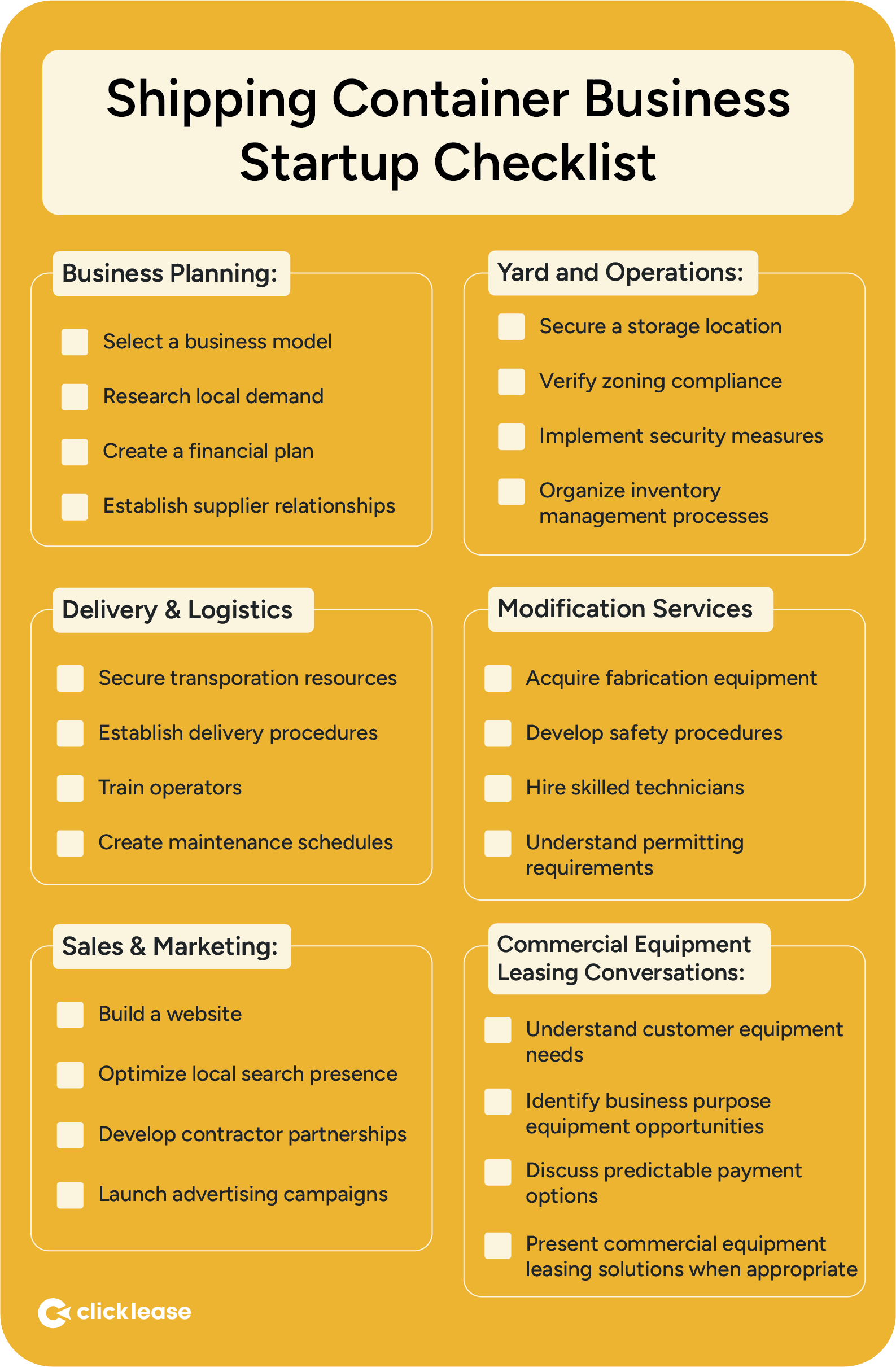
Before launching, review the following checklist:
Business Planning
- Select a business model
- Research local demand
- Create a financial plan
- Establish supplier relationships
Yard and Operations
- Secure a storage location
- Verify zoning compliance
- Implement security measures
- Organize inventory management processes
Delivery and Logistics
- Secure transportation resources
- Establish delivery procedures
- Train operators
- Create maintenance schedules
Modification Services
- Acquire fabrication equipment
- Develop safety procedures
- Hire skilled technicians
- Understand permitting requirements
Sales and Marketing
- Build a website
- Optimize local search presence
- Develop contractor partnerships
- Launch advertising campaigns
Commercial Equipment Leasing Conversations
- Understand customer equipment needs
- Identify business purpose equipment opportunities
- Discuss predictable payment options
- Present commercial equipment leasing solutions when appropriate
Build a Sustainable Shipping Container Business
The shipping container industry offers a variety of business opportunities, from sales and rentals to modifications and specialized conversions. Success often comes down to choosing the right business model, building strong supplier relationships, managing logistics efficiently, and creating a customer-focused sales process.
As your business grows, commercial equipment leasing options can help expand access to equipment while supporting larger transactions. By combining operational excellence with the right customer solutions, shipping container businesses can build sustainable growth in a market that continues to evolve.
Ready to help your customers access the equipment they need while supporting larger sales? Apply with Clicklease today and explore flexible commercial equipment leasing options designed for growing businesses.