How to Start a Restaurant Under $25K: What You’ll Need
Starting a restaurant does not always require hundreds of thousands of dollars. While full-scale dining concepts can be expensive, many entrepreneurs successfully launch food businesses for under $25,000 by starting small, keeping overhead low, and focusing on revenue first.
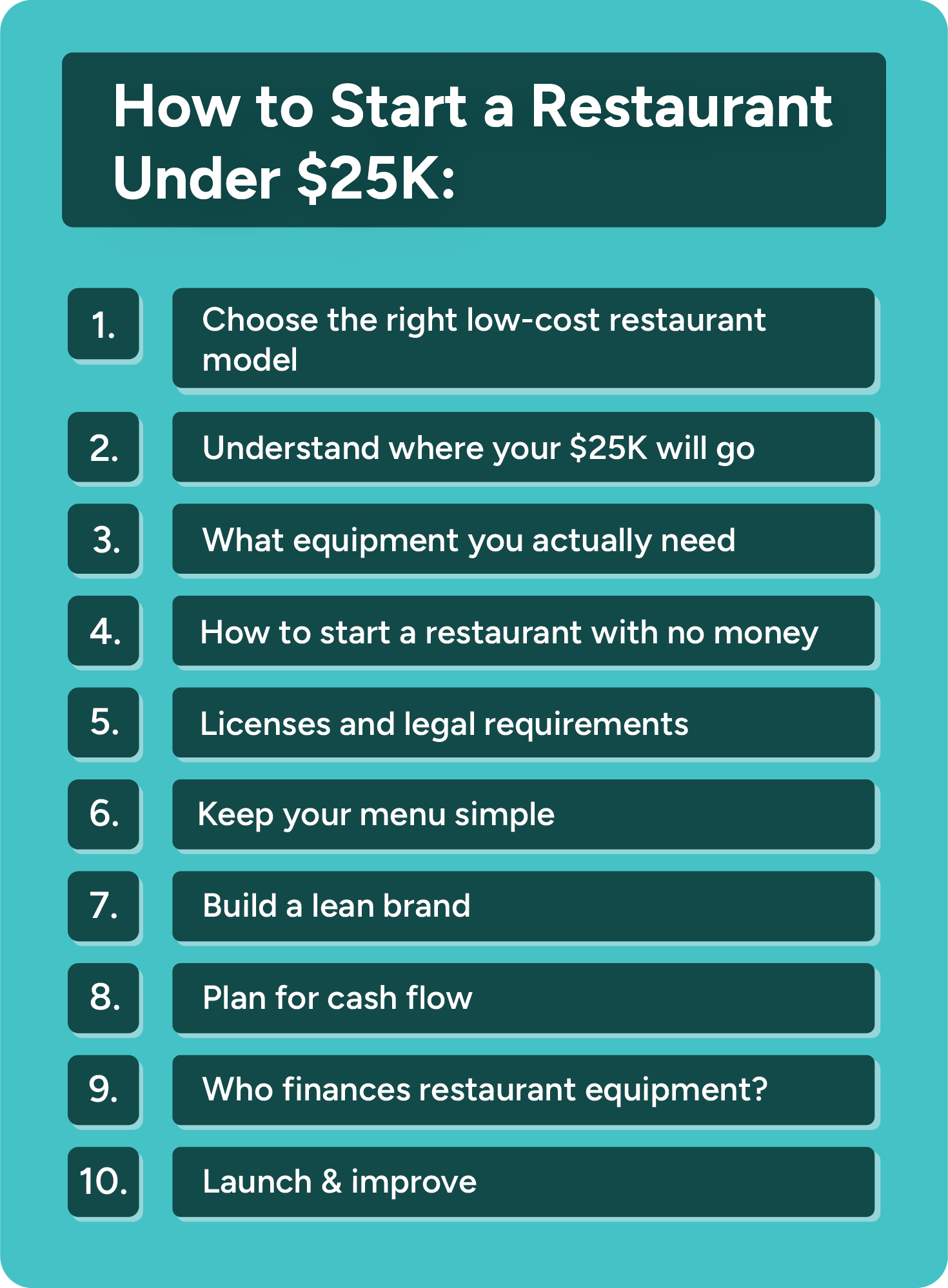
This starter kit is designed to help you clearly visualize what is needed to start your restaurant business plan on a lean budget. We will break everything down into simple, actionable steps to emphasize simplicity and empower you to move forward with confidence.
If you have been wondering how to start a restaurant, how much it costs to start a restaurant, or how to start a restaurant with no money, this guide will walk you through realistic options.
Step 1: Choose the Right Low-Cost Restaurant Model
If your budget is under $25K, your concept matters more than ever. Traditional dine-in restaurants are expensive because of rent, buildout, and staffing. For entrepreneurs asking how much it costs to start a restaurant, the answer depends heavily on the business model you choose.
Instead, consider models that keep costs manageable:
- Food truck
- Food trailer
- Ghost kitchen
- Pop-up restaurant
- Catering-based concept
- Shared commercial kitchen model
These options reduce rent, minimize buildout costs, and allow you to test demand before expanding. Starting lean is not limiting. It is strategic.
Step 2: Understand Where Your $25K Will Go
A realistic under $25K startup budget might include:
- Licenses and permits
- Used or entry-level equipment
- Initial food inventory
- Smallwares and utensils
- Point of sale system
- Branding and signage
- Marketing
- Working capital buffer
The largest portion of your budget will likely go toward equipment. Commercial refrigerators, prep tables, fryers, ovens, and warming units add up quickly. This is why many entrepreneurs explore equipment financing to secure essential tools without exhausting their startup capital.
Step 3: What Equipment You Actually Need
One of the biggest mistakes new restaurant owners make is overbuying equipment. Focus only on what directly supports revenue.
Core equipment typically includes:
- Commercial refrigerator or freezer
- Cooking equipment specific to your menu
- Prep tables
- Handwashing and sanitation stations
- Food storage shelving
- Basic smallwares like pans, knives, and utensils
- Point of sale system
Buying quality used equipment can significantly reduce startup costs. Many entrepreneurs also choose equipment financing to spread payments over time and preserve cash for inventory and payroll.
If you are asking, can I finance restaurant equipment? The answer is yes. Many providers specialize in restaurant equipment financing, including options for newer businesses.
Step 4: How to Start a Restaurant With No Money

Starting with zero dollars is difficult, but there are ways to minimize upfront costs.
- Partner with a shared commercial kitchen
- Launch as catering only
- Start with pop-up events to test demand
- Purchase reliable used equipment
- Explore equipment financing options
- Consider partnerships to split costs
If you are researching restaurant equipment financing limited credit options, know that some equipment-focused providers look beyond just a credit score and consider the overall business opportunity.
The goal is to generate revenue as quickly as possible while keeping risk manageable.
Step 5: Licenses and Legal Requirements
Even on a small budget, compliance is essential.
Common requirements include:
- Business registration
- Food handler certifications
- Health department permits
- Local business license
- Sales tax registration
- Fire inspection approval
Regulations vary by state and city, so confirm requirements early to avoid unexpected delays.
Step 6: Keep Your Menu Simple
A streamlined menu keeps costs low and operations efficient. Instead of offering dozens of items, focus on a handful of strong options that share ingredients.
Benefits of a simplified menu include:
- Lower inventory costs
- Reduced food waste
- Faster service
- Easier staff training
- Stronger brand clarity
Simplicity protects both your budget and your margins.
Step 7: Build a Lean Brand
You do not need a large marketing budget to attract attention.
Start with:
- A clean logo
- An optimized Google Business profile
- Active social media accounts
- A basic website or landing page
- High-quality food photos
- Local partnerships
Encourage reviews early and often. Word of mouth is one of the most powerful growth tools in the restaurant industry.
Step 8: Plan for Cash Flow
One of the most common questions is how much it costs to start a restaurant and what ongoing costs I should expect.
Beyond startup expenses, you will need to manage:
- Food inventory restocking
- Labor costs
- Utilities
- Packaging supplies
- Insurance
- Marketing
If you are evaluating how to finance restaurant equipment, consider how monthly payments fit into projected revenue. A strong restaurant business plan should account for these recurring expenses and outline what is sustainable based on expected sales. Some business owners use a restaurant equipment finance calculator to estimate payments and determine what is sustainable based on expected sales.
Cash flow discipline is what allows a small startup to grow into a stable operation.
Step 9: Who Finances Restaurant Equipment?
Several types of providers offer equipment financing:
Traditional banks
Credit unions
Equipment financing companies
Specialized restaurant equipment providers
Equipment-focused providers often understand restaurant operations better than general lenders and may structure programs around the needs of small businesses.
When comparing options, look at:
- Monthly payment amount
- Term length
- Total repayment cost
- Qualification requirements
- Funding timeline
The right structure helps you move forward without putting unnecessary pressure on your business.
Getting Started with Clicklease
For entrepreneurs launching under $25K, preserving working capital is critical. Limiting up front cash use is where Clicklease can play a role.
Clicklease focuses on equipment leasing for small businesses, including restaurants, food trucks, and catering operations. Instead of paying the full cost of kitchen equipment upfront, business owners can secure what they need and make predictable payments over time.
Many startups choose Clicklease because:
- The process is designed for small businesses
- It supports new and growing companies
- It works with equipment dealers nationwide
- It helps preserve cash for inventory and operations
Whether you are opening a ghost kitchen or launching a food trailer, using equipment financing through Clicklease can help you get operational faster while protecting your startup budget.
See More: Step-by-Step Guide to Applying for a Lease with Clicklease
Step 10: Launch and Improve
Instead of waiting for everything to feel perfect, focus on launching efficiently and refining over time.
- Host a soft opening
- Collect customer feedback
- Adjust pricing if needed
- Refine kitchen workflow
- Optimize operations
Starting small allows you to learn, adapt, and grow without taking on overwhelming financial risk.
Frequently Asked Questions

How much does it cost to start a restaurant under $25K?
It depends on your model, but food trucks, pop-ups, ghost kitchens, and catering concepts can often launch within this range when equipment is purchased strategically and overhead is controlled.
Can I finance restaurant equipment as a startup?
Yes. Many new restaurant owners use equipment financing to acquire essential tools without paying the full cost up front.
What if I have credit challenges?
Some equipment financing providers evaluate more than just credit scores and consider the broader business opportunity.
What is the smartest way to start small?
Choose a focused concept, keep your menu tight, control overhead, prioritize revenue-generating equipment, and scale only after demand is proven.
How to Start a Restaurant Business the Smart Way
Learning how to start a restaurant does not mean committing to overwhelming debt or massive overhead. With the right plan, starting under $25,000 is achievable.
The key principles are straightforward.
- Start small.
- Focus on revenue first.
- Keep operations simple.
- Control costs carefully.
- Use equipment strategically.
- Scale once demand is proven.
You do not need everything on day one. You need clarity, discipline, and the willingness to take the first step. With the right structure and the right equipment partner, your restaurant idea can move from concept to reality faster than you think. Apply today with Clicklease and take the next step toward launching your restaurant.