How to Open a Restaurant: Costs, Profitability, and Step-by-Step Checklist

Yes, a restaurant business can be profitable, and for many entrepreneurs, it becomes both a rewarding career and a scalable long-term investment. However, profitability depends on planning, cost control, concept strength, and operational consistency. From small cafés to full-service dining establishments, restaurants succeed when they balance smart decision-making with strong customer experience.
Below, we’ll break down how to open a restaurant, how profitable a restaurant business can be, what it costs to open one, and provide a complete checklist of the steps required to launch successfully.
How Profitable Is a Restaurant Business?
Restaurant profit margins typically range between three percent and ten percent, depending on concept, location, and cost control. While that margin may seem modest, well-managed restaurants with steady traffic and strong branding can generate meaningful revenue over time.
Profitability is influenced by several key factors:
- Food cost control
- Labor management
- Rent and overhead expenses
- Menu pricing strategy
- Customer retention and repeat visits
Restaurants that carefully manage inventory, reduce waste, and maintain efficient staffing models are more likely to protect their margins. A clear brand identity and consistent service also increase long-term success.
Is It Hard to Open a Restaurant?
Opening a restaurant is detailed and operationally complex, but it is very achievable with the right preparation. The process involves far more than just creating a menu. It requires business registration, permits, location selection, staff hiring, equipment purchases, and system development.
Because there are many moving parts, organization and planning are critical.
How Much Does It Cost to Open a Restaurant?
Startup costs vary widely based on size, location, and concept.
- A small café or quick service location may cost between one hundred thousand and three hundred thousand dollars.
- A mid-sized casual dining restaurant may require two hundred fifty thousand to seven hundred fifty thousand dollars.
- Larger or upscale establishments can exceed one million dollars.
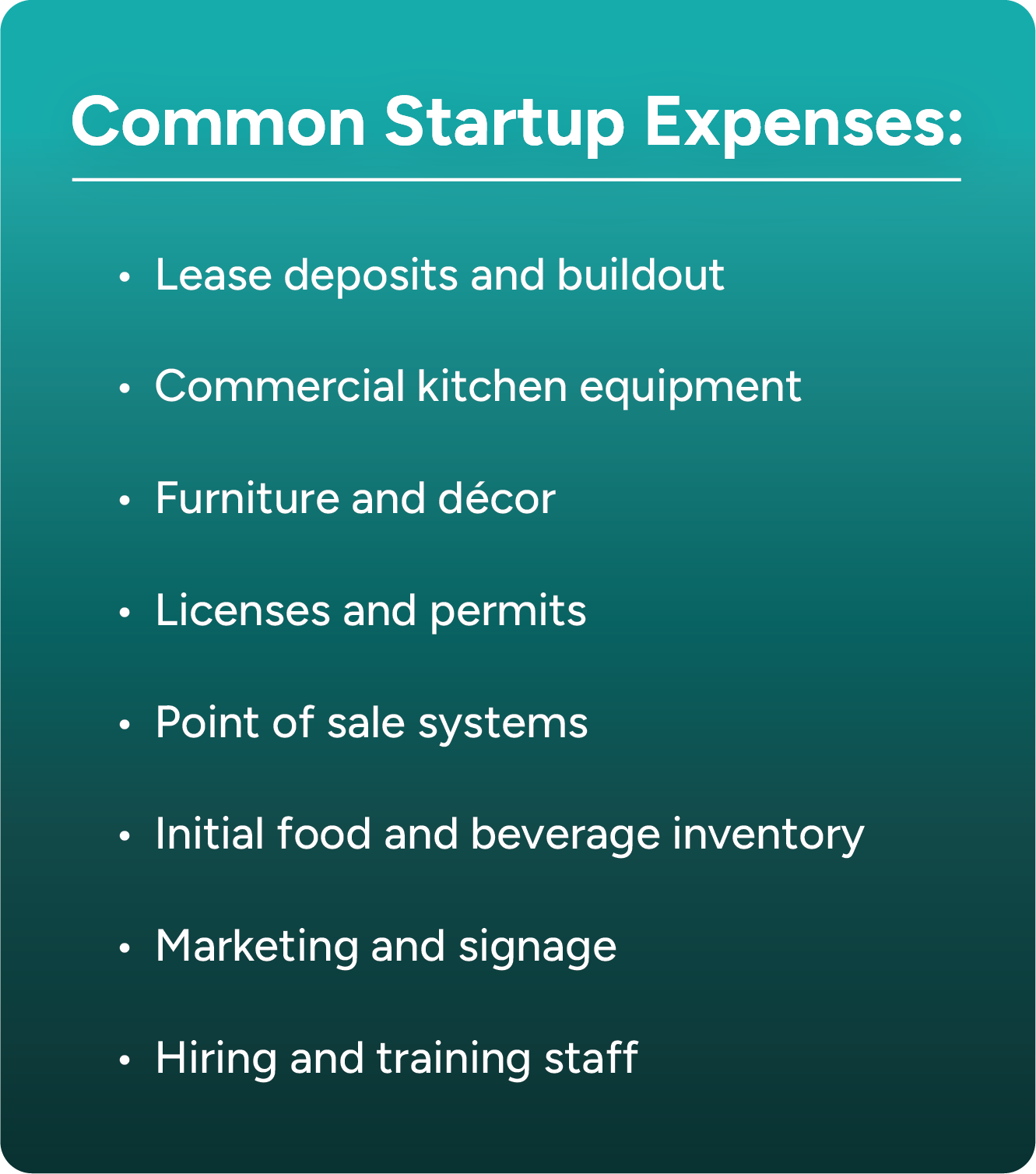
Common startup expenses include:
- Lease deposits and buildout
- Commercial kitchen equipment
- Furniture and décor
- Licenses and permits
- Point of sale systems
- Initial food and beverage inventory
- Marketing and sigage
- Hiring and training staff
Kitchen equipment is often one of the largest expenses. Many restaurant owners explore equipment financing to secure essential items like ovens, refrigeration units, prep tables, and dishwashers while preserving cash for daily operations. Clicklease is one option businesses may consider when looking for flexible equipment financing.
Good Restaurant Ideas to Consider
The right concept plays a major role in profitability. Strong restaurant ideas often solve a problem or fill a gap in the local market.
Popular concepts include:
- Fast casual with customizable menu options
- Health-focused café or smoothie bar
- Food truck with lower overhead
- Delivery-focused ghost kitchen
- Specialty international cuisine
- Farm to table dining
- Brunch-focused restaurant
Before finalizing your concept, research local competition, evaluate neighborhood demographics, and understand what customers in your area are actively seeking.
Opening a Restaurant Checklist
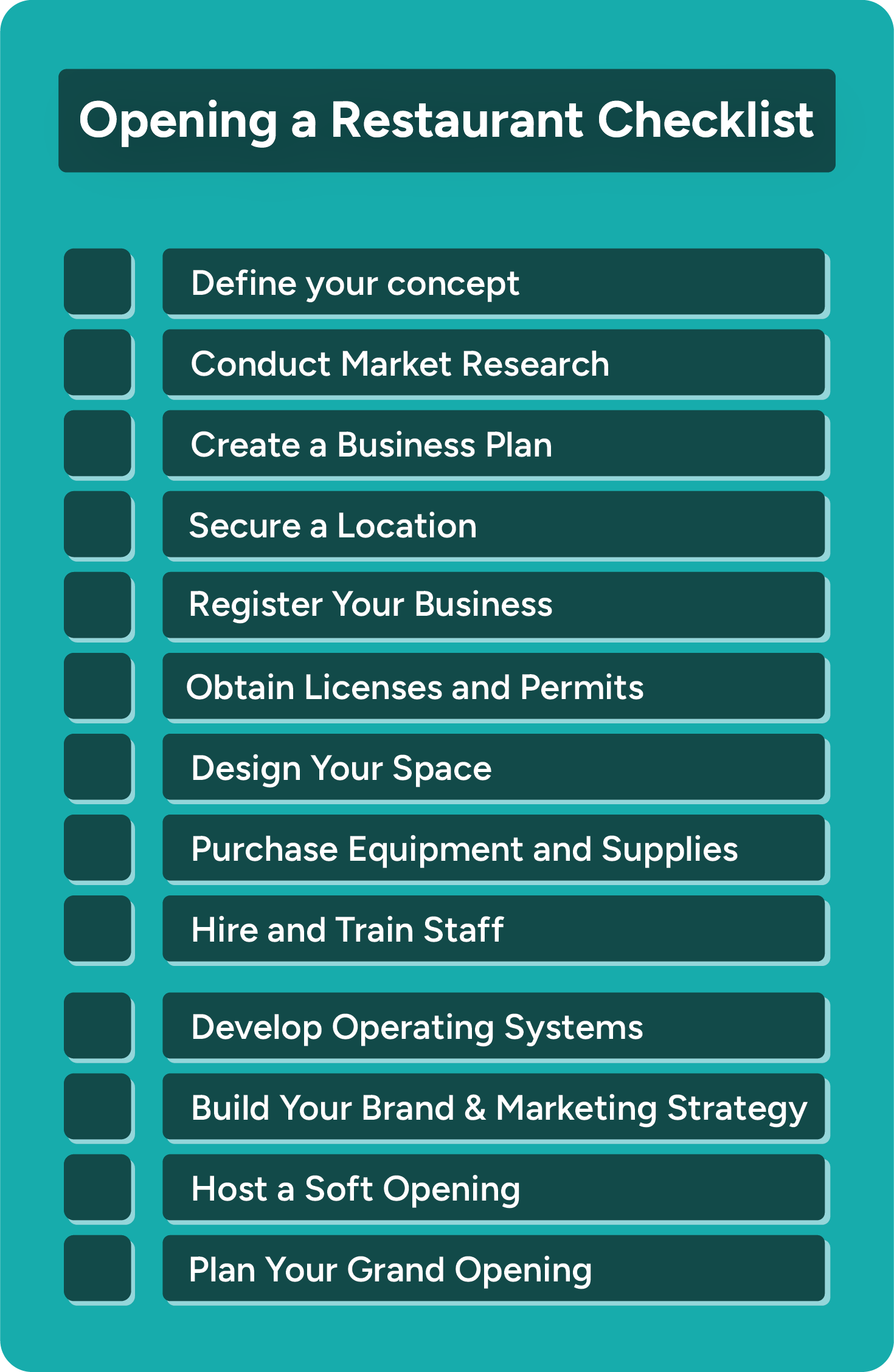
Opening a restaurant requires careful coordination across legal, operational, and branding steps. Below is a comprehensive checklist to guide the process from idea to grand opening.
1. Define Your Concept
- Choose your cuisine and service style
- Identify your target customers
- Develop your value proposition
- Create a preliminary menu
- Outline pricing strategy
2. Conduct Market Research
- Analyze competitors in your area
- Study local demographics
- Evaluate traffic patterns and visibility
- Identify gaps in the market
- Test demand through surveys or pop-ups
3. Create a Business Plan
- Write an executive summary
- Detail your restaurant concept
- Outline your marketing strategy
- Create operational plans
- Project startup costs
- Forecast revenue and expenses
Even outside of funding purposes, a business plan serves as your roadmap for decision-making.
4. Secure a Location
- Research high traffic areas
- Review zoning requirements
- Evaluate parking availability
- Inspect plumbing and electrical capacity
- Negotiate lease terms
Location directly impacts customer volume and long-term success.
5. Register Your Business
- Choose a legal structure such as an LLC or corporation
- Register your business name
- Apply for an EIN
- Open a business bank account
6. Obtain Licenses and Permits
- Apply for a business license
- Secure a food service permit
- Pass health department inspections
- Obtain fire department approval
- Apply for a liquor license if applicable
- Secure signage permits
Requirements vary by city and state, so early research is essential.
7. Design Your Space
- Develop a functional kitchen layout
- Plan an efficient workflow
- Design the dining area
- Ensure ADA compliance
- Align décor with brand identity
Operational flow is just as important as visual appeal.
8. Purchase Equipment and Supplies
- Install commercial ovens and ranges
- Purchase refrigeration units
- Set up prep stations
- Install dishwashing systems
- Implement a point of sale system
- Order smallwares and utensils
- Purchase tables and chairs
Equipment financing is often used to help restaurants acquire essential tools while maintaining working capital for payroll and inventory.
See more: Understanding Equipment Lease Payment Options
9. Hire and Train Staff
- Recruit kitchen staff
- Hire front-of-house employees
- Train on food safety standards
- Train on service expectations
- Develop employee handbooks
- Establish scheduling systems
Well-trained staff directly impact customer satisfaction and retention.
10. Develop Operating Systems
- Create inventory management procedures
- Establish supplier relationships
- Implement ordering schedules
- Develop opening and closing routines
- Set food safety protocols
- Define cash handling procedures
Strong systems reduce mistakes and improve consistency.
11. Build Your Brand and Marketing Strategy
- Create your logo and visual identity
- Launch your website
- Set up social media profiles
- Optimize your online business listings
- Plan pre-opening promotions
- Build an email list
Early marketing helps generate anticipation before launch.
12. Host a Soft Opening
- Invite friends, family, and select guests
- Test kitchen efficiency
- Evaluate service timing
- Gather feedback
- Refine menu items and pricing
A soft opening allows you to adjust before serving a larger audience.
13. Plan Your Grand Opening
- Promote on social media
- Offer limited-time specials
- Partner with local businesses
- Encourage online reviews
- Capture customer contact information
A strong launch sets the tone for long-term growth.

Final Answer: Is a Restaurant Business Profitable?
Yes, a restaurant business can be profitable, but success depends on preparation, operational discipline, and delivering consistent value to customers. Restaurants that carefully manage costs, maintain quality, and build strong community presence are positioned for sustainable growth.
Opening a restaurant requires planning, organization, and commitment. With the right concept, clear systems, and smart equipment decisions, it becomes not just a dream but a structured path toward building a thriving business.
If you are looking to open a restaurant and don’t have the cash on hand to get equipment, lease your equipment with a small business lease from Clicklease. Apply today to get an instant decision and start bringing your restaurant vision to life.