How Successful Are Food Trucks? Trends, Statistics, and Forecasts for 2026 and Beyond
You’re not just starting a food truck, you’re stepping into one of the fastest-moving parts of the restaurant world. With lower startup costs than a traditional location and strong customer demand, a food truck can be a practical way for you to launch, test your concept, and grow without taking on the overhead of brick-and-mortar.
So, how successful are food trucks really? Let’s look at the data, trends, and forecasts shaping the food truck industry, and what separates thriving food trucks from those that struggle.
How Successful Are Food Trucks in Today’s Market?
The U.S. food truck industry continues to show strong momentum. According to IBISWorld, the food truck services market generates more than $1.4 billion in annual revenue, with consistent growth over the past decade.

This growth is driven by:
- Increased demand for quick, high-quality meals
- Consumer preference for unique, local dining experiences
- Lower overhead compared to traditional restaurants
When asking “Are food trucks successful?”, the answer is increasingly yes! Especially when operators align with consumer trends and manage costs effectively.
What Is the Failure Rate of Food Trucks?
The idea that “most food trucks fail” is often overstated.
A frequently cited study from Square found that food trucks have a failure rate of around 25% over three years, which is lower than the roughly 60% failure rate of traditional restaurants during the same period.
Food Truck vs. Restaurant Survival Rates
Business Type
Approx. 3-Year Failure Rate
Food Trucks
~25%
Brick-and-Mortar Restaurants
~60%
Lower rent, smaller staff, and mobility all contribute to stronger survival odds for food trucks.
What Is the Success Rate of a Food Truck?
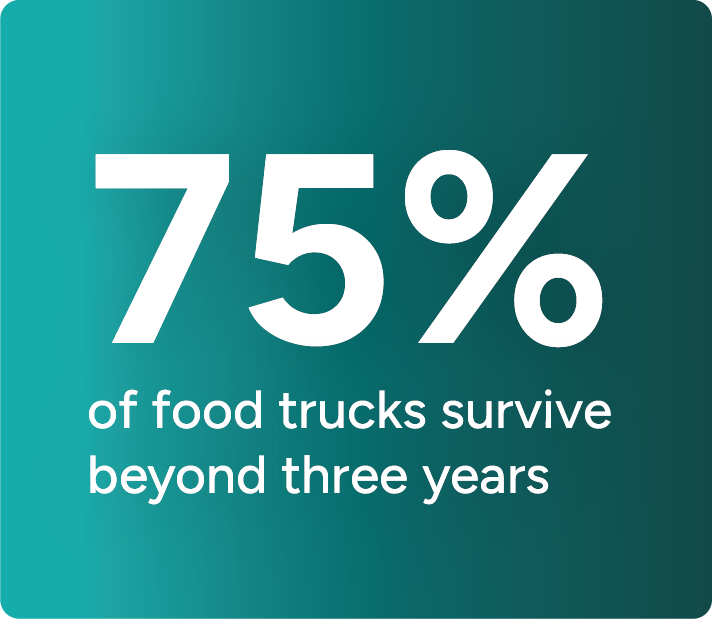
If roughly 75% of food trucks survive beyond three years, that puts the food truck success rate well above many other restaurant formats. The food truck success rate is one reason the industry remains appealing to new operators.
According to U.S. Bureau of Labor Statistics data on mobile food services, food trucks benefit from:
- Lower fixed expenses
- Faster paths to profitability
- Easier concept testing and menu iteration
How Much Profit Does a Successful Food Truck Make?
One of the most common questions is what a successful food truck can realistically earn in profit. A food truck’s profit potential comes down to volume, margins, and consistency.
Based on aggregated data from Toast, Square, and Upserve:
- Average annual revenue: $250,000–$500,000
- High-performing food trucks: $750,000+ annually
- Net profit margins: 10%–20%
Estimated Annual Profit
- Conservative estimate: $25,000–$50,000
- Well-run, high-volume truck: $75,000–$150,000+
Profitability depends heavily on location strategy, menu pricing, and operating efficiency.

What Consumer Trends Make a Food Truck Successful?
Understanding what consumer trends make a food truck successful is key to long-term growth. To stay competitive, you need to follow what customers are ordering, how they prefer to buy, and where they’re discovering new food.
According to the National Restaurant Association, today’s customers value:
- Convenience and speed
- Global flavors and bold concepts
- Transparency and fresh ingredients
- Customization and dietary options
Additional trends boosting food truck success:
- Online ordering and cashless payments
- Social media-driven discovery
- Pop-ups, festivals, and corporate catering
Why Food Trucks Fail
Even with strong market demand, not every food truck succeeds. Common reasons food trucks fail include:
- Poor location planning and scheduling
- Underestimating operating costs
- Limited marketing or weak branding
- Inconsistent food quality
- Regulatory and permitting challenges
Many failures stem from planning issues, not a lack of demand.
Why Food Trucks Succeed
When you keep overhead low and make decisions based on real-time demand, you can grow steadily without needing a permanent location. Food trucks that thrive tend to share these advantages:
- Lower startup and operating costs
- Ability to test concepts quickly
- Strong local and repeat customer engagement
- Adaptability to trends and seasons
- Scalable path to catering, multiple trucks, or permanent locations

Keys to a Successful Food Truck Business
For operators wondering how to be successful with a food truck, these best practices consistently matter most:
1. Focus on a Clear, Profitable Concept
Simple menus with strong margins outperform large, complex offerings.
2. Invest in Reliable Equipment
Breakdowns cost time and revenue. Quality equipment supports consistency and speed.
3. Master Location Strategy
High-traffic areas, events, and private bookings can dramatically increase sales.
4. Build a Strong Brand Presence
Active social media and clear branding help customers find you again and again.
5. Control Costs From Day One
Track food costs, labor, and maintenance closely to protect margins.
Food Truck Industry Forecast: What’s Next?
Industry analysts project continued growth through 2026, driven by:
- Urbanization and dense metro markets
- Demand for fast-casual alternatives
- Expansion into catering and private events
Final Takeaway: How Successful Are Food Trucks?

So, how successful are food trucks? The data shows they are:
- More resilient than traditional restaurants
- Capable of generating strong profits
- Well-aligned with modern consumer preferences
With the right strategy, equipment, and execution, the food truck industry remains one of the most accessible and promising paths in the food service industry.
Clicklease offers an accessible way to get started with a food trailer business through an equipment lease. Ready to take the next step? Apply now to see if you qualify with Clicklease and get the equipment you need to launch or grow your mobile food service business.