Your Food Truck Starter Kit Under $25K: Equipment Financing the Smart Way
You don’t need a six-figure budget or years of restaurant experience to start a food truck business. With the right equipment, a clear plan, and realistic expectations, leasing a food trailer can help you launch for under $25,000 and start serving customers sooner than you think.
This food truck starter kit walks you through what you need at each step, helps you estimate your equipment costs, and explains how food trailer equipment financing can make your path to opening more affordable and manageable.
How Much Money Do You Need to Start a Food Truck Business?
The total cost to start a food truck depends on whether you buy new or used, lease certain assets, or start with a trailer instead of a full truck.
According to Toast, typical startup costs break down as follows:
Typical Food Truck Startup Cost Range
- Used food truck or trailer: $15,000–$50,000
- New, fully built food truck: $75,000–$150,000+
- Licenses, permits, and insurance: $2,000–$5,000
- Initial inventory and supplies: $1,000–$3,000
Many operators keep upfront costs lower by focusing on essential equipment only and using financing options for a food truck business, like equipment financing, to preserve cash.
Your Under-$25K Food Truck Starter Kit (Step by Step)
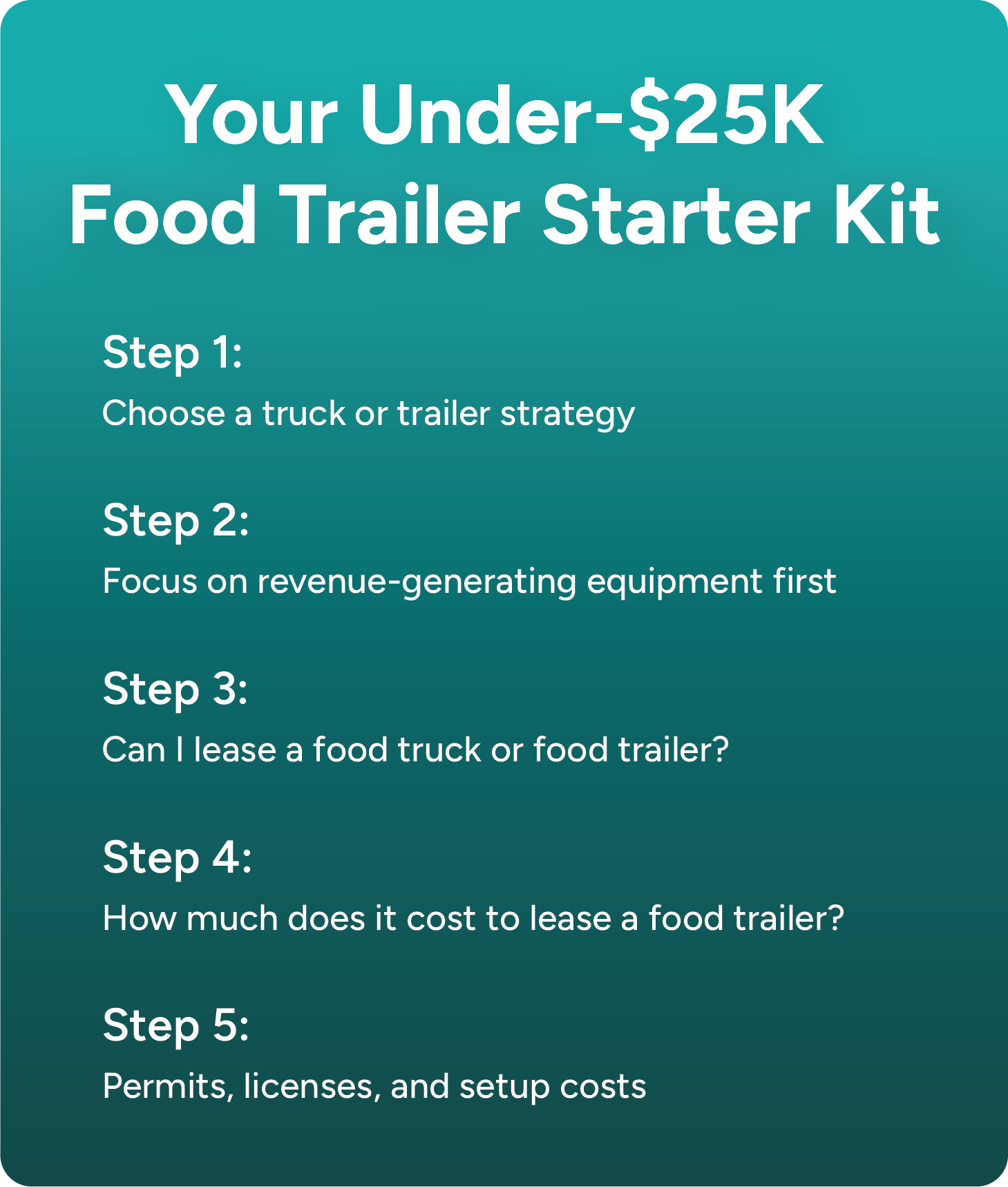
Step 1: Choose a Truck or Trailer Strategy
For many first-time owners, the most cost-effective option is:
- A used food truck, or
- A food trailer paired with an existing vehicle
Food trailers typically cost 30–50% less than full trucks and are easier to scale.
Step 2: Focus on Revenue-Generating Equipment First
Instead of overbuilding, successful operators start with only what they need to serve customers efficiently.
Core equipment checklist:
- Flat top grill or range
- Fryer (if menu requires it)
- Refrigerator or prep table
- Freezer (optional, menu-dependent)
- Vent hood system
- Generator or power hookup
- POS system
This is where equipment financing becomes critical to managing cash flow, spreading equipment costs over time instead of paying all at once.
Step 3: Can I Lease a Food Truck or Food Trailer?
Yes. Many operators choose leasing or other equipment financing to get on the road faster whether they are asking, “Can I finance a food truck?” or “How do I lease a food trailer?”
Leasing or using other equipment financing allows you to:
- Avoid a large upfront purchase
- Match payments to revenue
- Upgrade equipment as your business grows
According to IBISWorld, food trucks benefit from lower fixed costs when equipment expenses are structured over time rather than paid in full upfront.
Step 4: How Much Does It Cost to Lease a Food Truck?
Costs vary by equipment type, condition, and term length, but many operators arrange payments so they remain manageable during early growth stages.
Typical ranges:
- Food trailer leasing or equipment leasing: hundreds to over a thousand per month
- Individual kitchen equipment items: commonly bundled together with trailer
Leasing incorporates low up front cost and allows rapid operation start-up while preserving capital for marketing, permits, and inventory.
Step 5: Permits, Licenses, and Setup Costs
Even with equipment secured, plan for:
- Health department permits
- Local vending licenses
- Commissary kitchen fees
- Insurance coverage
The U.S. Small Business Administration outlines these regulatory considerations clearly for food truck businesses.
How Hard Is It to Finance a Food Truck?
A common question is how difficult financing a food truck business can be. In most cases, success depends on preparation, not perfection.
Food trucks/trailers are often easier to qualify for than traditional restaurants because:
- Equipment has residual value
- Startup costs are lower
- Revenue begins faster
Having a clear equipment list, budget, and operating plan significantly improves outcomes when comparing financing options for a food truck business, including solutions like Clicklease.
Why do Start-ups Select an Equipment Lease?
Traditional bank loans can be difficult for startups to obtain since they often require tax returns and proof of established operations. Many food truck operators instead use leasing for trailers or other specialty equipment.
This approach allows new businesses to move forward without waiting years to build operating history and can be a practical route when getting a food truck for the first time.
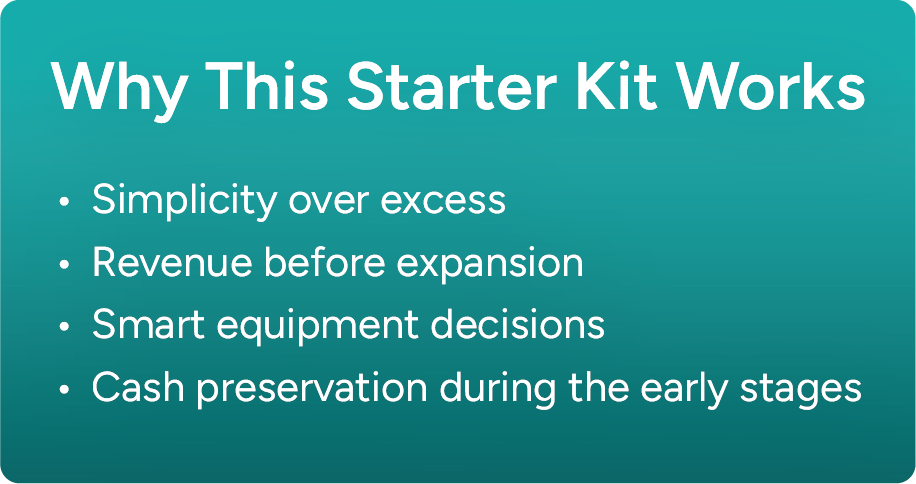
Why This Starter Kit Works
This under-$25K approach emphasizes:
- Simplicity over excess
- Revenue before expansion
- Smart equipment decisions
- Cash preservation during the early stages
It’s designed to help entrepreneurs move forward confidently without feeling overwhelmed.
Final Takeaway: Leasing a Food Trailer Starts With a Plan
So, how much money do you need to start a food truck business? With the right approach, many entrepreneurs begin with less than $25,000 by focusing on essentials and using equipment leasing or other financing strategically.
This starter kit isn’t about shortcuts. It’s about making smart, informed decisions that set your food trailer up for sustainable growth. Ready to launch? Apply now to see if you qualify for a Clicklease equipment lease and take the next step toward getting your food trailer on the road.